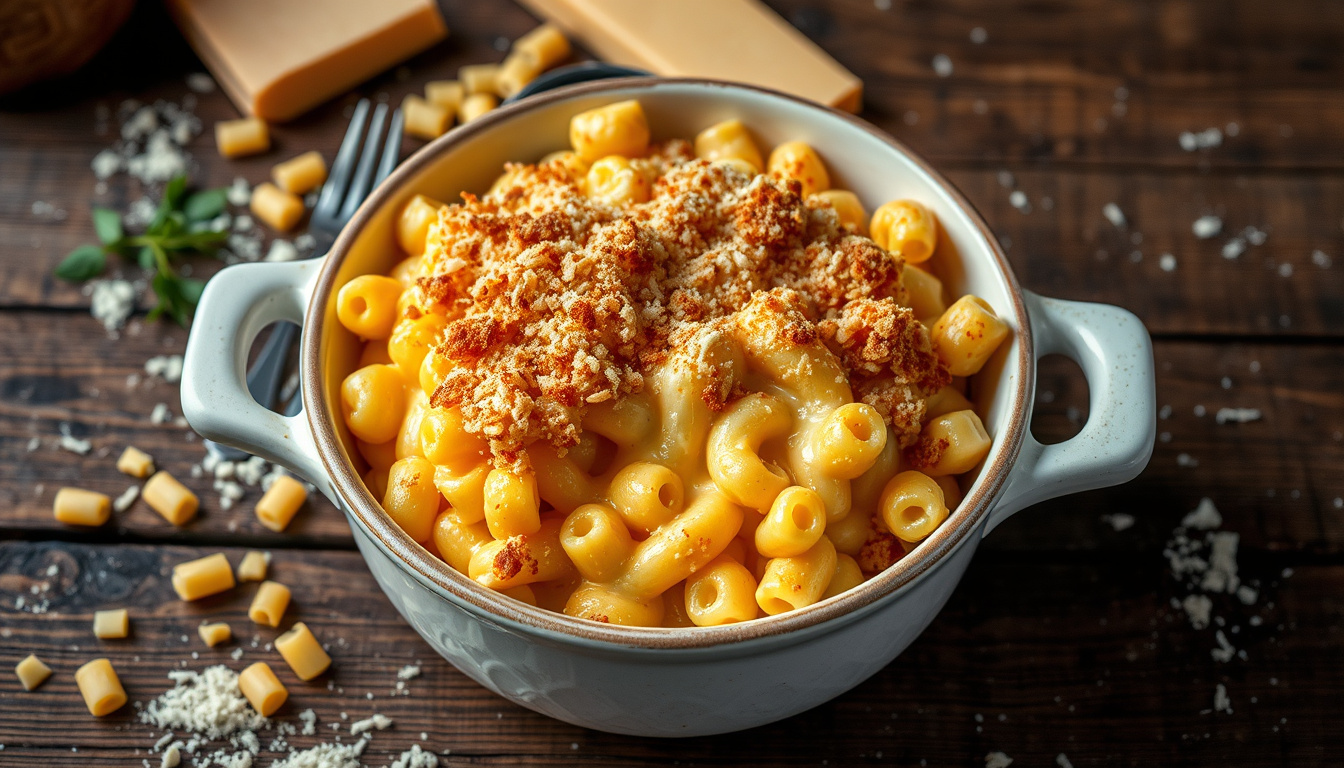
Gordon Ramsay has pushed mac and cheese further than most chefs, layering multiple cheese varieties, adding unexpected ingredients like cauliflower, and applying professional sauce techniques you’d never find in a boxed mix. Whether you want a quick stovetop version or a golden-baked crowd-pleaser, the secrets are simpler than you’d think.
Origin: United States · Popular boxed brand: Kraft · Common pasta type: Elbow macaroni · Key cheese: Cheddar
Quick snapshot
- Core ingredients: pasta, cheese, sauce base (The Daily Meal)
- Ramsay uses 1:1 cauliflower-to-macaroni ratio by volume (The Daily Meal)
- Three English cheeses: Cheddar, Lancashire, Cheshire (The Daily Meal)
- Exact origin date of mac and cheese recipe
- Whether Lancashire cheese is essential or interchangeable
- Nutritional calorie counts for Ramsay’s specific recipes
- Avoid pre-shredded cheese (anti-caking agents ruin smoothness) (Hell’s Kitchen Recipes)
- Make sauce thinner than desired—it thickens while baking (Hell’s Kitchen Recipes)
- Toast breadcrumbs in butter for 5 minutes before topping (TheFoodXP)
- Master Ramsay’s 375°F baked version in 20-25 minutes (Hell’s Kitchen Recipes)
- Try the minimalist 3-ingredient stovetop method (Hell’s Kitchen Recipes)
- Explore healthy swaps without losing creaminess (Hell’s Kitchen Recipes)
| Label | Value |
|---|---|
| First known recipe | 1800s cookbook |
| Iconic brand | Kraft since 1937 |
| Avg calories per serving | 500-700 |
| Pasta shape | Elbow macaroni |
| Roux cooking time | 2 minutes |
| Cauliflower boiling time | 5 minutes max |
What’s the secret to good mac and cheese?
The secret lies in two places: the cheese sauce foundation and how you treat the pasta. Gordon Ramsay builds his sauce with a proper roux—melted butter whisked with flour and mustard powder, cooked for exactly 2 minutes before adding milk. This step eliminates the raw flour taste and creates the silky base that holds everything together.
Cheese sauce techniques
The single biggest mistake home cooks make is reaching for pre-shredded cheese. Those bags contain anti-caking agents that coat each shred and prevent proper melting. Ramsay insists on grating your own—sharp Cheddar for bold flavor, Lancashire for buttery richness, and Cheshire for a tangy, crumbly finish (Hell’s Kitchen Recipes).
Pre-shredded cheese saves time but costs you creaminess. A $4 block of sharp Cheddar and 5 minutes of grating transforms a grainy sauce into something luxuriously smooth.
Another professional move: make your cheese sauce slightly thinner than you think you want. It continues cooking and thickening once it hits the oven. Ramsay tests seasoning before baking, noting that flavors concentrate during the 20-25 minute bake at 375°F. If the top browns too quickly, he covers the dish with foil to protect the creamy interior while finishing cooking (Hell’s Kitchen Recipes).
Pasta cooking tips
Cook your pasta to al dente—firm with a slight bite. It continues cooking in the oven, and nobody wants mushy mac. Ramsay adds cauliflower florets during the last 3 minutes of macaroni cooking time, then drains everything together. The cauliflower (kept in chunks, not pureed) adds sweetness, a hint of bitterness, and nutty notes that elevate the entire dish.
Baking vs stovetop
Baked mac and cheese develops a golden crust and concentrated flavors through that extended oven time. Stovetop versions stay creamier but lack the textural contrast. Ramsay’s approach delivers both: a creamy interior with a buttery breadcrumb topping that crisps during baking (The Daily Meal).
What ingredients do I need for mac and cheese?
A solid mac and cheese recipe requires just five categories: pasta, cheese, a sauce base, fat, and seasoning. Elbow macaroni remains the classic choice, though short penne or shells work too. The cheese foundation typically starts with sharp Cheddar—its bold flavor stands up to baking—and can be layered with milder cheeses for complexity.
Essential pantry items
- Elbow macaroni (or short pasta of choice)
- Sharp Cheddar cheese, freshly grated
- Butter (unsalted for control)
- All-purpose flour
- Whole milk
- Salt, black pepper, mustard powder
Cheese varieties
Ramsay’s sophisticated version uses three types of English cheeses: sharp Cheddar for bold taste, Lancashire for buttery notes, and Cheshire for crumbly texture and tangy finish. Gruyere makes an excellent substitute for Lancashire if unavailable. The Bread Street Kitchen version adds fresh mozzarella—sliced and torn into chunks—for textural contrast (YouTube).
Single-cheese recipes work fine, but layering cheeses creates depth. Each variety melts differently and contributes distinct flavor notes that a single cheddar simply can’t match.
Optional add-ins
- Cauliflower florets (Ramsay’s signature addition)
- Broccoli florets or spinach
- Crispy bacon or pancetta
- Jalapeños or hot sauce for heat
- Fresh herbs like thyme or chives
The implication: these add-ins let you customize the dish to your preferences while keeping the core technique intact.
What are the best 3 ingredients for mac and cheese?
If you’re looking for minimalism without sacrificing taste, Serious Eats demonstrates that three ingredients can deliver a satisfying stovetop version: pasta, cheese, and milk or cream. The trick is using enough cheese (about 8 ounces per pound of pasta) and cooking the pasta directly in milk so the starches release naturally and create body.
Minimalist recipe breakdown
- 1 pound elbow macaroni
- 8-12 oz sharp Cheddar, freshly grated
- 3-4 cups whole milk
- Salt and pepper to taste
Why these work
Pasta provides the structure. Cheese creates creaminess and flavor. Milk binds everything while adding richness. That’s the triangle—everything else is enhancement, not necessity.
Substitutions
Half-and-half or heavy cream can replace whole milk for richer results. Gruyere or Fontina can substitute Cheddar if you prefer milder flavor. The proportions stay roughly the same: enough cheese to coat every pasta piece, enough liquid to keep it saucy.
What are common mistakes when making mac and cheese?
Five mistakes appear repeatedly in home kitchens, according to recipe testers and professional chefs. Each one has a clear fix once you know what went wrong.
Overcooking pasta
Pasta continues cooking during baking. Cook to al dente—firm with resistance when bitten. Overcooked pasta turns to paste when it meets the hot sauce and extended oven time.
Grainy sauce fixes
A grainy sauce usually means the cheese was added too quickly or at too high heat. The fix: grate cheese fresh, add it in stages, and never let the sauce boil after cheese goes in. Low heat and patience prevent the proteins from seizing up and separating from the fat.
Pre-shredded cheese contains cellulose or potato starch as anti-caking agents. These coatings prevent the cheese from melting smoothly, creating a gritty, separated sauce every time. The solution costs nothing: grate it yourself.
The pattern: professional chefs consistently identify the same handful of errors—and each has a one-sentence solution that experienced home cooks learn to internalize.
Undermixing
Toss the pasta thoroughly with the sauce before baking. Uneven coating means some pieces end up dry while others swim in cheese. Use enough sauce to generously coat every piece, then spread into your baking dish.
Roux errors
The roux is your sauce’s backbone. Add flour to melted butter, whisk constantly, and cook for the full 2 minutes. Undercooked roux tastes raw; overcooked burns. This investment of attention pays off in a sauce that holds together beautifully.
Insufficient seasoning
Plain pasta and cheese need salt at every stage: pasta water, sauce base, and final taste test. Ramsay seasons aggressively with cayenne pepper, mustard powder, and fresh black pepper. His three key seasonings transform a flat cheese flavor into something with real depth.
Is mac and cheese healthy or unhealthy?
A typical serving of mac and cheese runs 500-700 calories with significant fat content from butter, cheese, and often cream. That’s not health food—but it doesn’t have to be. The dish serves a purpose: comfort, satisfaction, and often nostalgia. The question is whether you want to make it a daily staple or an occasional treat.
Nutrition breakdown
Standard homemade mac and cheese (per serving, approximately 1 cup):
- Calories: 500-700
- Fat: 25-35g
- Protein: 18-22g
- Carbohydrates: 45-55g
- Sodium: 600-900mg (higher with processed cheese)
Healthy swaps
Several modifications reduce calories without destroying the comfort factor:
- Use whole wheat or chickpea pasta for extra fiber and protein
- Substitute low-fat milk and reduced-fat cheese (accept some texture trade-offs)
- Increase vegetable content with cauliflower (Ramsay’s approach), broccoli, or spinach
- Limit portion size and pair with a green salad
Portion tips
Serving size matters more than ingredient swaps. A reasonable portion (about 1 cup) satisfies without excess. Ladling massive scoops transforms a reasonable side into an caloric overload. Pair with roasted vegetables or a salad to balance the meal.
How to make mac and cheese step by step
Follow these steps for Ramsay-inspired mac and cheese with professional technique and crowd-pleasing results.
Ingredients
- 1 pound elbow macaroni
- 4 tablespoons unsalted butter
- 4 tablespoons all-purpose flour
- 1 teaspoon English mustard powder
- 3 cups whole milk
- 1 cup each: sharp Cheddar, Lancashire, Cheshire (grated)
- Cauliflower florets (optional, 1:1 ratio by volume with pasta)
- ½ cup breadcrumbs
- 2 tablespoons butter (for topping)
- Salt, cayenne pepper, freshly ground black pepper
Instructions
- Boil the pasta: Cook macaroni in salted water to al dente. During the last 3 minutes, add cauliflower florets if using. Drain and set aside.
- Build the roux: In a saucepan over medium heat, melt butter. Add flour and mustard powder, whisking constantly. Cook for exactly 2 minutes until golden and bubbly.
- Make the sauce: Gradually add milk while whisking. Bring to a gentle simmer and cook until slightly thickened, about 5 minutes. Remove from heat.
- Add the cheese: Stir in grated cheese a handful at a time, letting each addition melt before adding more. Season with salt, cayenne, and black pepper.
- Combine: Pour sauce over drained pasta and cauliflower. Toss thoroughly until every piece is coated. The sauce should look slightly thinner than final desired consistency.
- Bake (optional but recommended): Transfer to a buttered baking dish. Top with buttered breadcrumbs. Bake at 375°F for 20-25 minutes until golden and bubbling.
- Rest and serve: Let stand 5 minutes before serving. If top browns too quickly, tent with foil for the final minutes.
Baking creates that golden crust and concentrated flavor—but requires 25+ minutes of additional time. Stovetop versions take 15 minutes total. Decide what matters more to you: textural contrast or speed.
Expert voices
“Pre-shredded cheese should be avoided as it contains anti-caking agents that affect sauce smoothness. Always grate your own for the silkiest result.”
— Hell’s Kitchen Recipes (Ramsay Recipe Analysis)
“Ramsay’s mac and cheese uses three types of English cheeses: Cheddar for bold taste, Lancashire for buttery notes, and Cheshire for crumbly texture and tangy finish.”
— The Daily Meal (Culinary Analysis)
“Cauliflower adds notes of sweetness, bitterness, and nuttiness—and keeps the dish from feeling heavy. It transforms mac and cheese from heavy side to satisfying main.”
— The Daily Meal (Ramsay Recipe Review)
The implication: these culinary analysts consistently note that Ramsay’s ingredient choices—particularly the three-cheese blend and cauliflower addition—represent calculated decisions that home cooks can replicate without restaurant-level equipment.
Summary
Mac and cheese rewards attention to a few key details: grating your own cheese, building a proper roux, and seasoning aggressively. Gordon Ramsay’s versions show how professional techniques elevate a comfort food staple, whether through cauliflower add-ins, multiple cheese varieties, or precise baking temperatures. For home cooks, the choice is clear: spend five minutes grating cheese and two minutes on the roux, or accept a grainy, flat-tasting result every time.
How long to bake mac and cheese?
Most recipes call for 20-25 minutes at 375°F until golden and bubbling. Some versions (like TheFoodXP variation) bake at 400°F for 15-20 minutes. Watch for a golden-brown top and bubble edges.
Can I freeze mac and cheese?
Yes. Portion into freezer-safe containers, cool completely, then freeze for up to 3 months. Thaw overnight in the refrigerator and reheat at 350°F with a splash of milk to restore moisture.
What milk for mac and cheese sauce?
Whole milk produces the richest results. Some cooks use half-and-half or cream for extra richness. Avoid skim or nonfat milk—it lacks the fat content needed for proper sauce texture.
Gluten-free mac and cheese options?
Substitute rice flour or cornstarch for the roux thickener. Use gluten-free pasta shapes. Check cheese labels for additives that might contain gluten. The sauce technique works identically.
Vegan mac and cheese recipe?
Nut-based sauces (cashews blended with nutritional yeast, lemon juice, and garlic) mimic cheese texture. Cauliflower or potatoes blended with carrots provide body. Several brands now offer plant-based cheese alternatives.
Best cheese blend for mac and cheese?
Sharp Cheddar provides the base. Gruyere or fontina adds melt factor. A small amount of Parmesan boosts umami. Experiment with 2-3 cheeses: one bold, one mild, one melty. Freshly grated always beats pre-shredded.
How to reheat mac and cheese?
Oven: 350°F for 20-25 minutes, covered with foil for the first 15, then uncovered to restore crispness. Stovetop: low heat with a splash of milk, stirring frequently. Microwave: 1-2 minutes on 50% power, stirring halfway.
Related reading: Cauliflower Cheese Recipe · Easy Cookie Recipe
Gordon Ramsay’s grated cheese and roux secrets align closely with the UK celebrity chefs guide, where UK stars debate silky versus bubbly macaroni cheese styles.

Priya Mitchell leads fact-checking, source verification and corrections at Oz Monitorly.