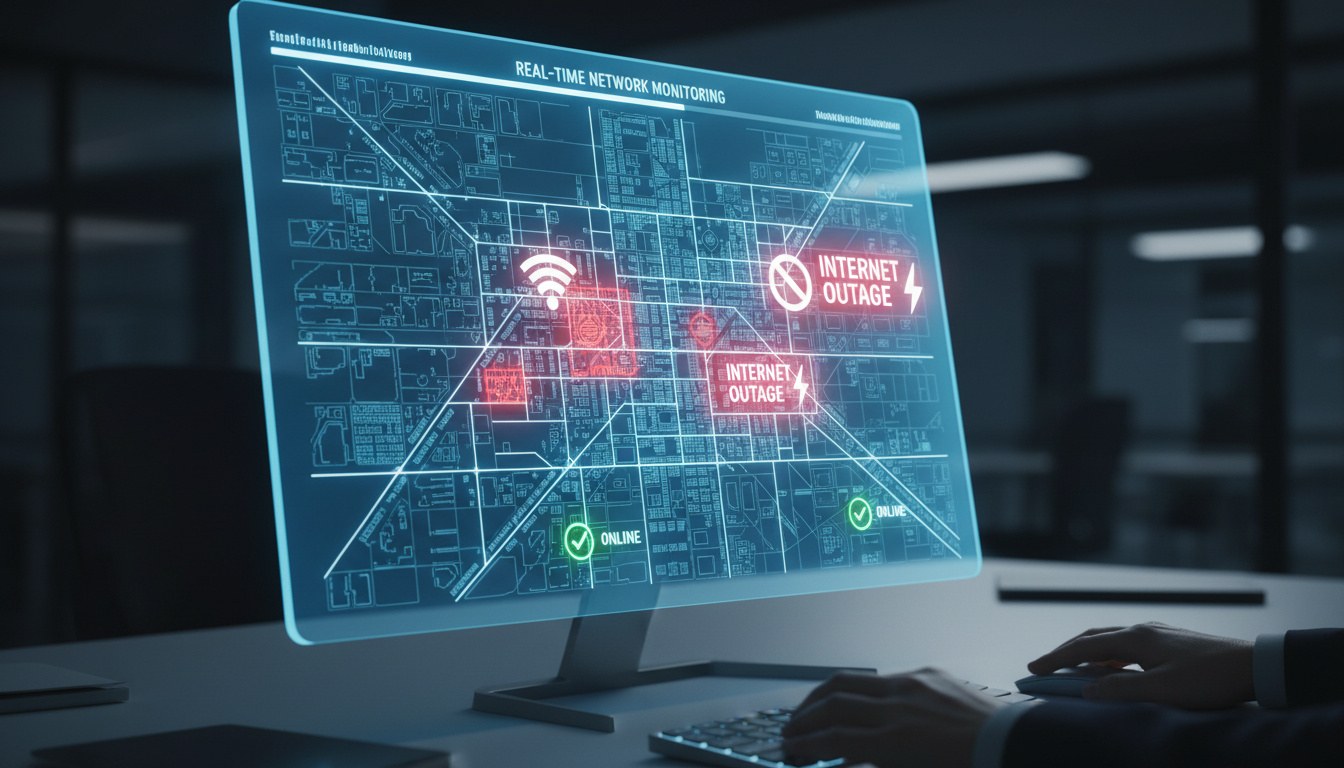
Connectivity disruptions impact productivity, communication, and emergency services access. When service drops unexpectedly, determining whether the issue affects only your connection or extends across the neighborhood becomes critical for deciding the next steps.
Multiple platforms now provide real-time visibility into network health through different methodologies. Some rely on automated telemetry from network infrastructure, while others aggregate user-submitted reports to build geolocated heatmaps of service disruptions.
Understanding the distinction between localized equipment failures and broader infrastructure outages saves time during troubleshooting. Verification tools, common failure points, and reporting mechanisms reflect current network monitoring capabilities.
How Do I Check for Internet Outages in My Area?
ANT displays IPv4 network blocks using interactive grid cells with historical playback controls.
GeoBlackout monitors major providers including Xfinity, Spectrum, and Verizon through user reports.
Pingdom tracks hourly outages highlighting HTTP 403, timeouts, and 404 errors globally.
ThousandEyes provides ISP, cloud, and SaaS outage visualization for infrastructure analysis.
- ANT maps utilize IPv4 /24 blocks represented by circles sized according to affected network counts.
- Color coding indicates outage percentages within specific geographic grid cells.
- GeoBlackout tracks T-Mobile, Frontier, COX, WOW!, AT&T, and other major US carriers.
- Common error signatures include HTTP 401, 520, and connection timeouts visible on monitoring dashboards.
- ThousandEyes maintains an Internet Outages Timeline documenting past incidents for analysis.
- Downdetector aggregates real-time user reports for TV, phone, and internet service disruptions.
- Historical data allows playback of specific dates and times via ANT’s archive interface.
| Platform | Coverage Area | Primary Method | Key Feature |
|---|---|---|---|
| ANT | Global | IPv4 /24 grid cells | Historical playback controls |
| GeoBlackout | United States | User geolocation | 24-hour trend charts |
| Pingdom | Global | Network telemetry | Hourly error code tracking |
| ThousandEyes | Global | ISP/cloud probes | Enterprise outage timeline |
| Downdetector | Global/US | Crowdsourced reports | Real-time status pages |
| CenturyLink Portal | Regional | ISP infrastructure | Account-specific alerts |
| Spectrum Status | Regional | Network operations | Location-based notifications |
What Causes Internet Outages?
Service interruptions stem from diverse technical failures ranging from physical infrastructure damage to software configuration errors. GeoBlackout data indicates that area-wide network failures, fiber-optic cable cuts, and maintenance operations rank among the most frequently reported causes.
Infrastructure and Cable Networks
Underground fiber-optic lines and aerial cable systems face disruption from construction accidents, severe weather, and vehicular collisions with utility poles. Heavy traffic periods strain capacity at network nodes, triggering temporary service degradation or complete connectivity loss for entire neighborhoods.
Equipment and Maintenance Operations
Routine maintenance windows occasionally extend beyond scheduled timeframes, leaving subscribers offline longer than anticipated. Equipment faults in central offices or neighborhood nodes cascade downstream to residential connections. CenturyLink documentation confirms that hardware failures and infrastructure issues represent primary outage drivers.
Network monitoring through Pingdom reveals recurring error patterns during active outages: HTTP 403 forbidden responses, connection timeouts, 401 authentication failures, 520 web server errors, and standard 404 not found messages.
Mobile Network Disruptions
Cellular service interruptions affect voice calls, 4G/5G data connectivity, VoLTE voice services, and eSIM provisioning. These mobile-specific failures often coincide with terrestrial broadband outages during major weather events or infrastructure failures.
How Do I Report an Internet Outage?
Documenting service disruptions helps build accurate community maps and alerts neighbors to widespread issues. Two primary channels exist for reporting: crowdsourced platforms and direct ISP communication systems.
Community Reporting Platforms
GeoBlackout allows users to submit geolocated reports that populate real-time heatmaps of service disruptions. These submissions track major ISPs including T-Mobile, Frontier, and Xfinity. Similarly, Downdetector accepts user reports for specific services and regional markets.
Check modem and router status lights before submitting reports. Unplug equipment for 30 seconds to rule out localized hardware issues. Power cycling phones resolves many mobile data interruptions without requiring formal outage reports.
Direct ISP Communication
Major providers maintain dedicated portals and mobile applications for outage notifications. The CenturyLink help center displays service alerts when users log into their accounts. Spectrum offers troubleshooting guidance for post-outage service restoration. Contacting ISP support directly remains unnecessary when an area outage has already been confirmed.
For travelers seeking connectivity updates, refer to the Live Status and Terminal Guide to check service availability at transit hubs.
How Long Do Internet Outages Typically Last?
Duration varies significantly based on fault complexity, technician availability, and infrastructure type. Simple equipment resets resolve issues within minutes, while fiber-optic cable repairs or storm damage restoration may extend across multiple days.
Duration Variables
No standardized timeframe applies across all service interruptions. ThousandEyes historical data reveals past incidents ranging from brief DNS misconfigurations resolved within hours to extended BGP routing issues lasting days. Geographic isolation and weather conditions further complicate repair timelines.
Record exact outage start times and service restoration timestamps. Individual ISP terms and conditions determine eligibility for billing credits or compensation. Consult specific provider agreements or FCC.gov complaint data for regulatory guidance regarding prolonged interruptions. To understand potential compensation, you can check Samsung Galaxy S25 Ultra UK price for live internet outage maps in your area.
Compensation Uncertainty
Specific compensation policies remain unclear across the industry. Available search results lack definitive data regarding automatic refund thresholds, typical outage duration guarantees, or 2024 FCC reporting specifics. Customers must review individual service agreements to understand their rights regarding service level agreements and rebate eligibility.
Local business information remains accessible through resources like the Address Hours Phone Services Guide for checking operational status of nearby service providers.
What Major Outages Have Occurred Recently?
Specific 2024 outage events lack detailed cataloging in available monitoring databases. However, historical analysis tools provide context for understanding network vulnerability patterns.
- : Specific major incidents not detailed in current datasets; monitoring tools continue tracking in real-time.
- : Previous incidents archived in ThousandEyes Internet Outages Timeline for retrospective analysis.
- : ANT maintains historical playback capabilities allowing users to review specific dates and times through grid cell visualization.
- : Real-time monitoring continues via Downdetector and GeoBlackout for immediate status verification.
What Is Definitively Known About Current Outages?
Established Information
- Real-time grid visualization tracks IPv4 /24 network blocks globally through ANT.
- User report platforms confirm outages at T-Mobile, Spectrum, AT&T, and Verizon.
- Common HTTP error codes (403, 404, 520) indicate active service disruptions.
- Equipment restart protocols (30-second power cycles) resolve localized issues.
- Community reporting via GeoBlackout and Downdetector creates geolocated outage maps.
Remaining Uncertainties
- Specific duration estimates for active repair operations.
- Universal compensation policies across different ISP service agreements.
- 2024 FCC outage report specifics and regulatory filing details.
- Predictive maintenance schedules preventing future disruptions.
- Comparative outage frequency rankings between specific ISPs.
Why Do Outage Patterns Vary by Region?
Network topology and infrastructure density create distinct outage profiles across different geographic areas. Urban centers with redundant fiber paths experience different failure modes than rural regions dependent on single copper lines or wireless towers.
Climate factors influence regional reliability, with areas prone to ice storms, hurricanes, or wildfires facing higher physical infrastructure risks. Underground utility placement versus aerial pole-mounted cables further differentiates vulnerability to weather and accidental damage.
ISP market concentration affects reporting density. Regions served by multiple competing providers generate more granular outage data through user reports, while monopoly markets may underreport localized issues due to lack of comparative service benchmarks.
Where Does Outage Data Originate?
Interactive world maps divided into grid cells display circles indicating outage-affected networks, with size showing network count and color showing percentage out.
— ANT Internet Outage Maps
Users report issues to build real-time community maps showing 24-hour reports and charts for internet, mobile, and TV services.
— GeoBlackout
Common causes include area-wide network failures, equipment faults, or infrastructure issues affecting service availability.
— CenturyLink Technical Support
How Can I Stay Informed About Local Outages?
Verify service status through multiple verification methods before initiating repairs or contacting technical support. Combine automated network telemetry from tools like ANT and ThousandEyes with crowdsourced user reports from GeoBlackout and Downdetector to confirm area-wide disruptions. Document interruption timestamps for potential service credit claims, though specific compensation terms require direct consultation with individual ISP agreements. Maintain backup connectivity options for critical communications during extended infrastructure repairs.
Frequently Asked Questions
Can I get compensated for internet outages?
Compensation depends on individual ISP terms. No universal policies exist. Contact your provider directly and document outage duration. FCC.gov offers complaint filing options but does not mandate specific refund amounts.
Which ISPs experience the most frequent outages?
Comparative frequency data remains unavailable. Outage reporting varies by user density and platform adoption. Major ISPs including Spectrum, Xfinity, and AT&T maintain similar infrastructure vulnerability profiles.
What should I do immediately when my internet drops?
Restart your modem and router by unplugging for 30 seconds. Check status lights. Verify mobile data functionality. Consult Downdetector or GeoBlackout for area-wide issues before contacting support.
How do I check if my mobile data is affected by an outage?
Check GeoBlackout for mobile-specific reports affecting voice, 4G/5G data, VoLTE, or eSIM services. Power cycle your device. Mobile outages often parallel broadband disruptions during infrastructure failures.
Are business internet services reported differently than residential?
Business services typically utilize separate monitoring systems and SLA agreements. Enterprise tools like ThousandEyes track cloud and SaaS outages specifically. Residential crowdsourced maps may not reflect commercial circuit status.
How accurate are crowdsourced outage maps?
Accuracy correlates with user participation density. Urban areas show higher precision than rural regions. Cross-reference with ISP official status pages for confirmation. ANT provides automated network telemetry independent of user submissions.
What information should I provide when reporting an outage?
Include your location, ISP name, service type (internet/TV/phone), error messages received, and time of onset. GeoBlackout and Downdetector accept geolocated submissions. Avoid duplicate reports for confirmed area outages.

Priya Mitchell leads fact-checking, source verification and corrections at Oz Monitorly.