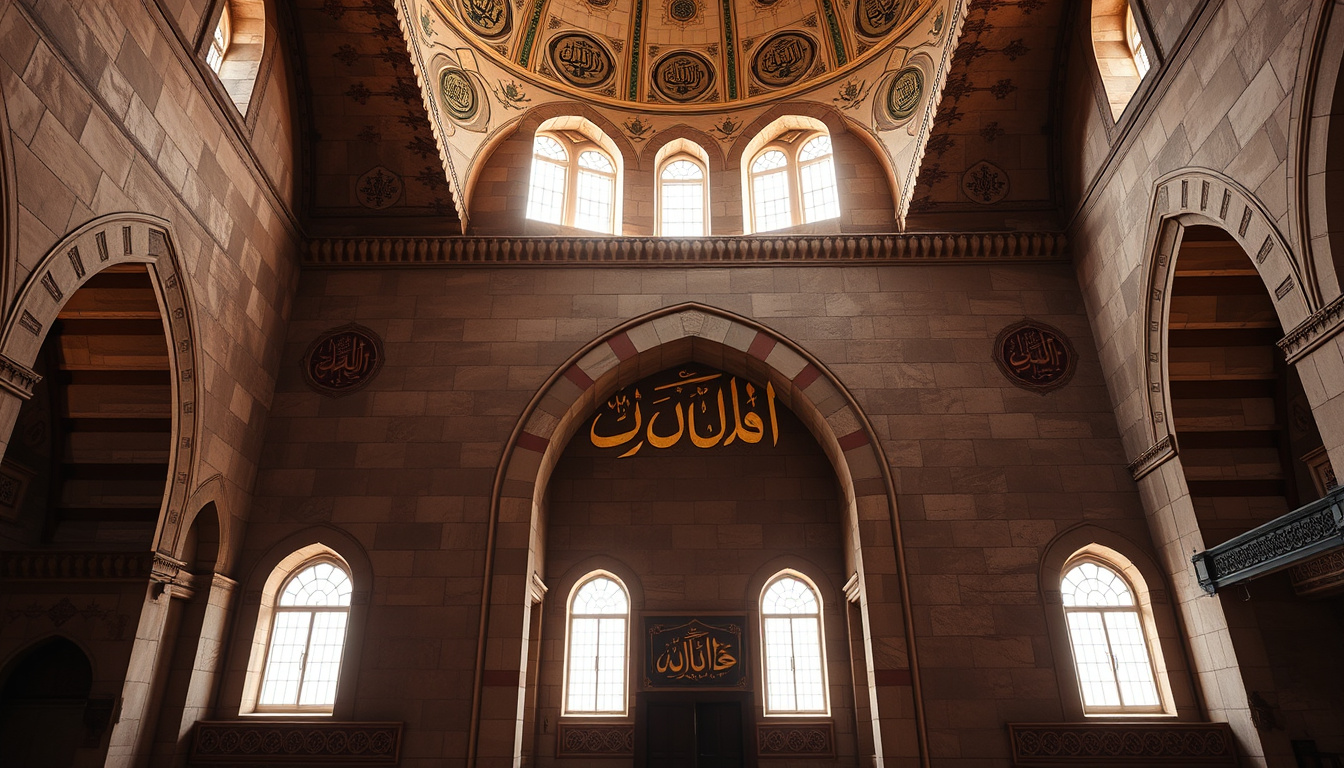
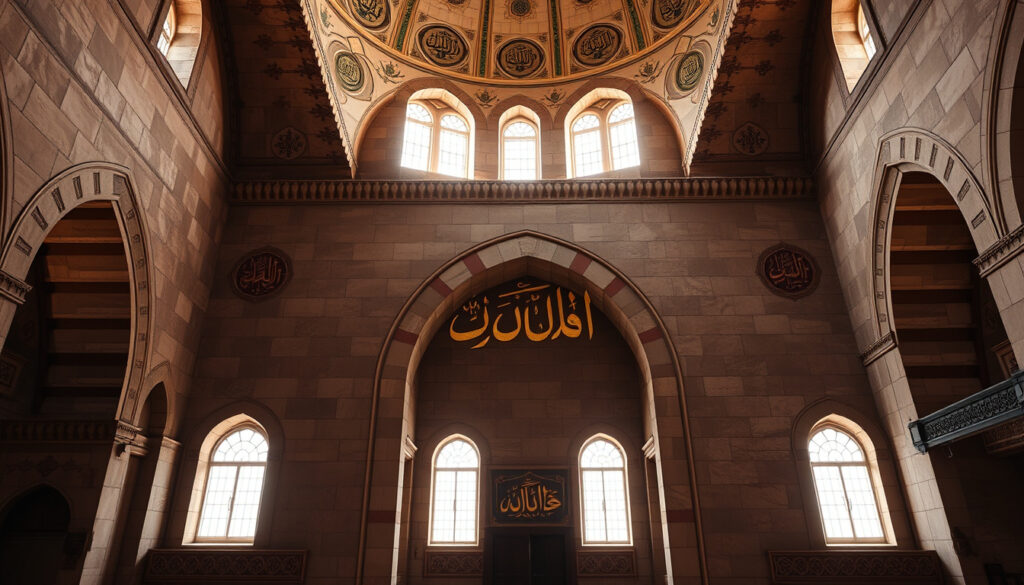
If you’ve ever heard someone shout “Allahu Akbar” in a movie or on the news, the image that probably stuck with you wasn’t a peaceful one. That reaction isn’t accidental — and it’s definitely not what the phrase means to over a billion people who say it every day. The truth is, “Allahu Akbar” has been twisted by media coverage in the decades since 9/11, but its authentic meaning is deeply woven into Islamic prayer, gratitude, and everyday life. Here’s what that phrase actually conveys and why the misunderstanding matters so much.
Literal Meaning: God is Greater · Arabic Script: اللّٰهُ أَكْبَر · Primary Use: Islamic prayer call · Terminology: Takbir · Wikipedia Entry: Takbir
Quick snapshot
- Allahu Akbar translates to “God is the Greatest” or “God is Greater” (AmazingTalker Arabic learning resource)
- Takbir is the Arabic term for this phrase, meaning “magnification of God” (Wikipedia entry on Takbir)
- Specific security reactions to the phrase vary by context and location
- Exact timeline of when media pejoration accelerated is debated among linguists
- September 11, 2001 marked a major turning point in Western media portrayal (University of Colorado linguistics research)
- August 2020: University research documented the linguistic pejoration process (University of Colorado linguistics research)
- Linguistic experts recommend education to restore positive connotations (University of Colorado linguistics research)
- Interfaith usage by Orthodox Christians offers bridge-building potential (Wikipedia entry on Takbir)
The following table summarizes key facts about the phrase “Allahu Akbar” and its significance across different contexts.
| Aspect | Detail |
|---|---|
| Phrase Origin | Quranic Arabic |
| English Equivalent | God is the Greatest |
| Global Usage | Muslims worldwide |
| Official Status | Motto of Iran and Iraq |
| Linguistic Form | Elative (comparative/superlative) from kabir meaning “big” |
| Semantic Shift | Pejoration since 9/11 in Western media |
What is the real meaning of Allahu Akbar?
At its most straightforward, Allahu Akbar means “God is the Greatest” or “God is Greater.” The Arabic word “akbar” is what’s called the elative form — similar to saying “bigger” or “biggest” in English — derived from the adjective “kabir,” meaning big. So when a Muslim says “Allahu Akbar,” they’re declaring that God surpasses everything, whether that’s human achievements, worldly concerns, or life’s challenges.
This isn’t an incomplete thought, though. Linguistically, it’s an abbreviated sentence understood to mean “God is greater than all” — the context fills in whatever comparison the speaker has in mind. The phrase embodies trust, reliance, and belief in God’s mercy, justice, and wisdom, serving as a reminder that nothing in the universe surpasses the divine.
Literal translation
Breaking down the Arabic: “Allahu” (الله) is God, and “Akbar” (أَكْبَر) means “greater” or “greatest.” The phrase is known as the Takbir in Islamic terminology, a word that literally translates to “magnification.” For Muslims, it’s as common in daily expression as “thank God” is among English-speaking Christians, used in moments of gratitude, amazement, relief, and even hardship.
Comparative form in context
The comparative nature of “Allahu Akbar” makes it remarkably versatile. A Muslim might say it when receiving good news, such as passing an exam or recovering from illness. It’s whispered into a newborn’s ear at birth to recognize the child as a blessing from God. It accompanies both weddings and funerals, sports victories and sunsets. The phrase transcends specific occasions — it’s an orientation toward the divine that colors countless everyday moments.
Five facts about usage, all pointing the same direction: Muslims deploy “Allahu Akbar” across the full spectrum of human experience — from the heights of celebration to the depths of grief. The phrase functions less like a prayer and more like a breathing technique for faith.
What happens if you say Allahu Akbar on a plane?
This is where the gap between authentic meaning and public perception becomes most visible. Saying “Allahu Akbar” at an airport or on an aircraft will almost certainly draw attention — not because the phrase is inherently alarming, but because decades of media coverage have trained many Western audiences to associate it with something sinister.
Google search results for “meaning of Allahu Akbar” prominently feature sources like Jihad Watch, Breitbart, and Urban Dictionary — outlets that characterize the phrase as “the ubiquitous battle cry of Islamic jihadists as they commit mass murder,” as one such source puts it. Urban Dictionary entries go further, associating the phrase with beheading and violence. This creates a distorted information environment where authentic Islamic usage gets overshadowed by hostile framings.
Public perceptions
Research from the University of Colorado’s linguistics department documents how the meaning of “Allahu Akbar” has shifted over the past several decades. The linguistic process at work is called pejoration — when a word or phrase acquires negative connotations over time. What began as a 2001-era media trope has become embedded in public consciousness, making innocent utterance potentially problematic regardless of intent.
Airport security reactions
The stakes are real. Security personnel operating in heightened alert environments may interpret the phrase as a trigger phrase, even though no legitimate aviation protocol designates it as such. For Muslims traveling, this creates a dilemma: do you suppress an automatic expression of faith to avoid misunderstanding, or stay true to habit and risk confrontation? This tension represents one of the more concrete costs of semantic pejoration — it forces believers to police their own speech in ordinary circumstances.
The implication is uncomfortable: even when the phrase carries no threat, its cultural baggage can transform ordinary prayer into a security incident. This is a direct consequence of media-driven semantic shift, not any inherent property of the Arabic itself.
Do Christians say Allahu Akbar?
The short answer is yes — and this is where the conversation moves beyond Muslim communities entirely. Arabic-speaking Orthodox Christians use the phrase as an expression of faith, not appropriation. Palestinian Christians use “Allah” in prayer to refer to the creator of the world and employ the takbir as a declaration of God’s greatness, exactly as their Muslim neighbors do.
This isn’t a new development or an attempt to blur religious boundaries. It’s simply how Arabic works as a language. “Allah” is simply the Arabic word for God — it’s the same word that appears in Arabic translations of the Christian Bible. When an Arab Christian prays, they address the same deity using the same vocabulary.
Arabic for God
The word “Allah” is not exclusive to Islam. It’s the standard Arabic term for God, used by Christians, Jews, and Muslims alike in Arabic-speaking communities. The prefix “Allahu” in “Allahu Akbar” simply means “God” — there’s no Islamic-specific content in the vocabulary itself. The religious specificity comes from context and intent, not from the words themselves.
Interfaith considerations
Theodosios Hanna, the Palestinian Orthodox Archbishop of Sebastia, has publicly defended the use of the takbir by Christians. His position reflects a broader recognition that the phrase belongs to shared Abrahamic heritage in the Arab world, where Christians and Muslims have lived together for centuries. For non-Arabic-speaking Christians, using the phrase might feel unusual, but for Arab Christians, it’s a natural part of worship vocabulary.
To truly understand it, one must see it within the spiritual, cultural, and religious context of Islam.
— AmazingTalker Arabic learning resource
Are Christians allowed to say Allahu Akbar?
From a linguistic standpoint, there’s nothing stopping anyone from saying “Allahu Akbar.” It’s an Arabic phrase, and phrases don’t carry religious copyright. A non-Arabic-speaking Christian who uses the phrase is simply speaking Arabic, just as they might say “Shalom” or “Amen” without those words belonging exclusively to Hebrew or Greek traditions.
From a theological standpoint, the question becomes more nuanced. For Orthodox Arab Christians and Palestinian Christians, the phrase aligns with their existing faith — declaring God’s greatness is central to Christian worship. For Christians from other traditions, using an Arabic phrase might feel culturally displaced, but it wouldn’t constitute heresy or offense.
Religious boundaries
The phrase declares God’s greatness — a sentiment no Christian would dispute. The difference lies in what that declaration means within each tradition’s theological framework. But the surface-level act of saying “Allahu Akbar” carries no prohibition for any Arabic speaker, and no meaningful barrier for others.
Linguistic facts
Understanding the phrase requires separating language from religion. “Allahu Akbar” is Arabic vocabulary expressing a religious sentiment that multiple faiths share. The fact that Arabic-speaking Christians use it daily demonstrates that the phrase transcends any single religious boundary. For English speakers, the equivalent might be saying “Glory to God” — a Christian phrase that Jews, Muslims, and others might also use without awkwardness.
In order for “Allahu Akbar” to regain its positive connotations, it is important to educate and remind people that it is an Arabic phrase used in the daily lives of billions of Muslims as a call to prayer.
— University of Colorado linguistics research
What language is Allahu Akbar?
Allahu Akbar is Classical Arabic, the language in which the Quran was revealed and which remains the liturgical language of Islam worldwide. Despite the existence of modern colloquial Arabic dialects across different countries, Classical Arabic remains the standard for prayer, religious instruction, and formal speech throughout the Muslim world.
The pronunciation is relatively straightforward for English speakers to attempt, though Arabic’s pharyngeal consonants present challenges. The International Phonetic Alphabet representation is [ʔaɫ.ɫaː.hu ʔak.bar]. At its core, you’re hearing two syllables that any English speaker could approximate: “Al-la-hoo Ak-bar.”
Arabic origins
The phrase appears throughout Islamic scripture and tradition, serving as the opening word of the call to prayer (Adhan) and repeated multiple times during each of the five daily prayers (Salah). Muslims recite it at the beginning of each prayer unit, after prostrations, and at various transition points throughout the ritual. Beyond formal prayer, it’s woven into the fabric of daily Islamic life — a constant reminder of God’s primacy.
Pronunciation guide
The key sounds to master: “Allahu” has a double “l” that English doesn’t require you to fully articulate — think “Al-la-hoo.” “Akbar” ends with a rolling “r” in proper pronunciation, though most English speakers simplify this to a standard “r.” The accent falls on the second syllable of each word: al-LA-hoo ak-BAR. Practice in context by listening to the Adhan, the traditional call to prayer broadcast from mosques five times daily worldwide.
For non-Muslims encountering this phrase: the person saying it is almost certainly doing something devotional or celebratory, not threatening. The phrase appears at Muslim births, weddings, graduations, and yes — also at funerals and moments of crisis. It’s a reflex of faith, not a declaration of intent.
Related reading: I Am Delilah – Biblical Meaning and Betrayal Story · What Does Gaslighting Mean – Definition, Signs, Examples
Frequently asked questions
What does Allahu Akbar mean in English?
Allahu Akbar translates to “God is the Greatest” or “God is Greater.” The phrase comes from Classical Arabic, where “Allahu” means God and “akbar” is the elative form meaning greater or greatest.
Is Allahu Akbar offensive?
In its original Islamic context, the phrase is not offensive — it’s a common expression of faith used in prayer and daily life by over a billion Muslims. However, Western media associations since 9/11 have made some audiences uncomfortable with the phrase. This discomfort reflects media-driven misconceptions rather than any inherent quality of the Arabic itself.
What is Allahu Akbar in Arabic?
In Arabic script, the phrase is written as الله أكبر (Allahu Akbar). In transliteration, it appears as “Allahu Akbar” or sometimes “Allahu Akhbar” depending on dialect pronunciation. The Arabic term for this phrase is “Takbir,” meaning magnification of God.
Why is Allahu Akbar said before death?
Muslims facing terminal illness or approaching death may recite “Allahu Akbar” as a declaration of faith at the threshold of meeting God. It serves as a final testimony of belief, similar to Christian last rites. The phrase emphasizes surrender to divine will at life’s most significant transition.
What does Allahu Akbar mean in war?
The phrase has no inherent connection to warfare. Some extremist groups have used it in violent contexts, creating harmful associations, but “Allahu Akbar” in Islamic tradition primarily means acknowledging God’s supremacy over all worldly matters — including conflict. Most Islamic scholars emphasize that military victory comes from God, not from human strength alone, which is why the phrase appears in various contexts including peaceful ones.
Can non-Muslims say Allahu Akbar?
There’s no linguistic or religious barrier preventing anyone from saying “Allahu Akbar.” Arabic-speaking Orthodox Christians use it regularly in worship. For non-Arabic speakers, using the phrase isn’t appropriation — it’s simply speaking Arabic, just as someone might say “Shalom” without being Jewish.
How do you pronounce Allahu Akbar?
Approximate pronunciation: “Al-LA-hoo ak-BAR.” The key sounds are the double “l” in Allahu (don’t over-pronounce it) and the rolled “r” at the end of Akbar. Accent falls on the second syllable of each word. Listen to the Adhan (call to prayer) for authentic models.
For non-Muslims who encounter this phrase in public, the takeaway is straightforward: the overwhelming odds are that the person saying it is praying, celebrating, or processing life — not threatening anyone. The discomfort many Westerners feel reflects a media-driven distortion of what should be understood as one of the world’s most common expressions of faith. Misunderstandings persist because news coverage amplifies negative associations while rarely showing the phrase in its everyday religious context, leaving many readers without the context needed to interpret it correctly.

Priya Mitchell leads fact-checking, source verification and corrections at Oz Monitorly.