
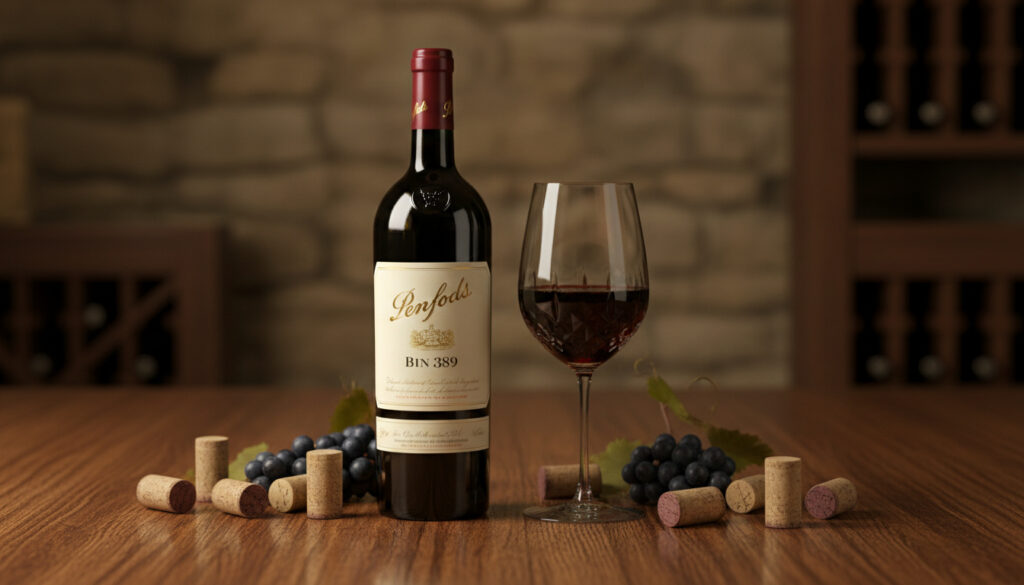
Penfolds Bin 389 Cabernet Shiraz stands as one of Australia’s most iconic red wines, bridging the gap between accessible luxury and cellar-worthy investment. First produced in 1960 by legendary winemaker Max Schubert, this multi-regional blend combines the structural elegance of Cabernet Sauvignon with the opulent richness of Shiraz, earning its reputation as the “Baby Grange” through its maturation in seasoned American oak hogsheads previously used for the flagship Grange vintage.
The wine exemplifies the Penfolds house style through its generous mid-palate weight, judicious balance between fruit intensity and American oak influence, and remarkable consistency across decades of production. Sourced primarily from premier South Australian vineyards in McLaren Vale, Barossa Valley, and Padthaway, Bin 389 has evolved from a experimental bottling into Australia’s most collected red wine, often surpassing its more expensive sibling in auction metrics and collector demand.
Contemporary releases maintain the original vision while reflecting modern viticultural precision. Recent vintages continue to garner scores between 94 and 97 points from major critics, with retail prices typically ranging from $50 to $100 USD for current releases, though older vintages command significant premiums in secondary markets.
What is Penfolds Bin 389?
Bin 389 occupies a unique position within the Penfolds hierarchy. Unlike Grange, which leads with Shiraz supported by minor Cabernet components, this blend maintains near-equal proportions of Cabernet Sauvignon and Shiraz, though the exact ratio shifts slightly with each vintage. The 2023 release comprises 51% Cabernet Sauvignon and 49% Shiraz, while earlier vintages from 2017-2020 typically featured 53-57% Cabernet.
- Known as “Baby Grange” for maturing in barrels previously used for the flagship Grange
- Created in 1960 by Max Schubert and produced continuously every vintage since
- Has become Australia’s most collected red wine by volume
- Typically scores 94-97 points from leading critics including James Suckling
- Offers cellaring potential of 20 to 40 years depending on vintage conditions
- Utilizes multi-regional fruit sourcing from McLaren Vale, Barossa Valley, and Padthaway
- Matured 12 months in American oak hogsheads, approximately 33% new wood in recent releases
| Attribute | Details |
|---|---|
| Producer | Penfolds |
| First Vintage | 1960 |
| Creator | Max Schubert |
| Grape Varieties | Cabernet Sauvignon, Shiraz |
| Region | South Australia |
| Key Sub-regions | McLaren Vale, Barossa Valley, Padthaway |
| Oak Maturation | 12 months American oak hogsheads |
| Typical Alcohol | 14.5% ABV |
| Closure | Screw cap (recent vintages) |
| Average Rating | 94-97/100 (critics) |
| Aging Potential | 20-40 years |
| Nickname | Baby Grange, Poor Man’s Grange |
The wine’s construction emphasizes Penfolds’ cross-regional blending philosophy. By combining Cabernet’s tannic backbone and acidity with Shiraz’s mid-palate density and spice, Schubert created a wine that develops complex tertiary characteristics while maintaining structural integrity through extended bottle aging. Official Penfolds documentation confirms the consistent application of these methods across six decades of production.
What Does Penfolds Bin 389 Taste Like?
Tasting profiles vary significantly by vintage, reflecting seasonal conditions and precise blend adjustments, yet maintain a consistent DNA of dark fruits, chocolate nuances, and American oak spice. Recent releases demonstrate the wine’s evolution while honoring its established character.
Vintage-Specific Characteristics
The 2017 vintage presents a deep purple-red appearance with aromas of ripe blackberries, plum compote, and blueberries underscored by tobacco, smoke, and eucalyptus. The palate reveals black cherries, raspberries, and mint with medium-plus acidity and tannins leading to an elegant finish. Detailed tasting notes highlight its full-bodied structure and cigar box nuances.
2018 stands as a benchmark vintage, offering dark purple-black coloration with concentrated blackberry, cassis, and dark chocolate notes. Expert analysis cites superfine polished tannins and a broad, dense finish that supports James Suckling’s 97-point rating and recommended drinking window through 2040.
The 2019 release introduces complex aromatics of cola, grated chocolate, cappuccino dust, and juniper alongside sage and rosemary herbal notes. The palate delivers fleshy blackcurrant, dark chocolate, and mocha with succulent acidity. Penfolds’ official tasting notes document impressive length and integrated tannin structure.
Recent 2020 and 2023 vintages continue this trajectory. The 2020 shows rich vanillin American oak, violet, and iodine notes with velvety tannins, while the 2023 release offers blackberries, cured meat, crushed stones, and ultra-refined tannins with a silky savory finish.
Despite annual variations in blend percentage and specific vineyard contributions, Bin 389 maintains remarkable stylistic consistency. Common descriptors across all vintages include blackberry, blackcurrant, plum, chocolate, licorice, cedar, vanilla, and firm yet polished tannin structures.
Structural Elements
The wine typically presents full-bodied concentration with medium to high acidity balancing the generous fruit weight. Tannins range from medium-plus to firm depending on vintage, always maintaining a polished, fine-grained texture that supports extended aging. The American oak influence contributes vanilla and spice components without overwhelming the varietal fruit expression.
How Much Does Penfolds Bin 389 Cost?
Market pricing reflects both immediate drinkability and long-term investment potential, with significant variation between current releases and mature vintages. Recent vintages including 2020 through 2023 typically retail between $50 and $100 USD per bottle in major markets, positioning the wine as a premium but accessible collector’s item.
Vintage Value and Availability
The 2018 vintage commands premium pricing due to its exceptional critical reception, with auction and specialty retailer prices exceeding standard release costs. Collector markets recognize this vintage as having decades of development potential. Older vintages from the 1990s and early 2000s trade at significant premiums, reflecting both scarcity and proven cellaring outcomes.
Price disparities emerge across distribution channels. Aggregation data shows regional variations, with Australian domestic pricing sometimes diverging from US and UK markets due to allocation strategies and taxation differences. Limited releases and older library stocks typically surface through auction houses and specialized fine wine retailers rather than general commerce.
As Australia’s most collected red wine, Bin 389 possesses strong secondary market liquidity. However, provenance and storage conditions significantly impact value, particularly for vintages predating 2000. Recent vintages offer the most reliable entry point for collectors building vertical collections.
Acclaim and Scores
Critical validation supports the pricing structure. The 2018 vintage earned 97 points from James Suckling for its “complete feel” and silky texture. The 2023 release received “Excellent” ratings from Suckling alongside positive assessments from Robert Parker, Wine Spectator, and Vinous, with particular praise for structural tension and savory complexity. These scores reinforce the wine’s position in the luxury market segment. For a deeper dive into specific wine reviews and ratings, explore the details at xn--pressinkym-w5ad.fi.
How Does Penfolds Bin 389 Compare to Grange?
The “Baby Grange” moniker suggests a hierarchical relationship, yet contemporary analysis reveals a more nuanced dynamic. While both wines utilize multi-regional South Australian fruit and American oak maturation, they diverge significantly in grape composition and stylistic intent. Grange leads with Shiraz supported by minor Cabernet additions, whereas Bin 389 maintains rough parity between the varieties, granting it greater Cabernet-driven structure and acidity.
Production methods share DNA through barrel protocols. Technical documentation confirms that Bin 389 matures in American oak hogsheads previously used for Grange, transferring seasoning and character between the flagship and its sibling. This practice creates textural similarities despite the different grape ratios.
Market positioning has shifted notably. While Grange remains Penfolds’ most expensive standard release, Bin 389 has surpassed it in collections by volume metrics, functioning as the more accessible entry point to the house style. Penfolds Grange demands significantly higher prices and longer aging before approachability, whereas Bin 389 offers earlier drinking windows alongside formidable cellaring capacity.
The “Poor Man’s Grange” nickname implies inferior quality, which misrepresents the wine’s standing. Bin 389 represents a different expression of Penfolds’ multi-regional philosophy rather than a lesser version, with certain vintages achieving scores and longevity rivaling its more famous sibling.
What is the History of Penfolds Bin 389?
- 1960 — Max Schubert creates the first Bin 389 vintage, establishing the Cabernet-Shiraz blend as a core component of Penfolds’ red wine portfolio. Historical records document this as a pivotal moment in Australian winemaking.
- 1960s-1970s — Continuous production solidifies the wine’s reputation for consistency. The practice of utilizing seasoned Grange barrels becomes standard protocol, creating the foundation for the “Baby Grange” identity.
- 1990s — The nickname “Baby Grange” gains widespread currency among collectors and critics, recognizing the shared heritage and barrel program while acknowledging the distinct blend composition.
- 2000s-2010s — Global distribution expands, establishing Bin 389 as the definitive introduction to premium Australian Cabernet-Shiraz blending. Collector markets begin tracking vertical collections with increasing granularity.
- 2018 — Release of the acclaimed 2018 vintage, earning 97 points from James Suckling and reinforcing the wine’s status among the world’s collectible red wines.
- Present — Bin 389 stands as Australia’s most collected red wine by volume, with current vintages maintaining the original stylistic vision while incorporating modern viticultural precision.
What is Established vs. Uncertain About Penfolds Bin 389?
Confirmed Information
- First produced in 1960 by Max Schubert; continuous production every vintage since
- Blend composition varies between 51-57% Cabernet Sauvignon and 43-49% Shiraz depending on vintage
- Matured 12 months in American oak hogsheads, including reused Grange barrels
- Current release pricing typically ranges $50-100 USD; older vintages command premiums
- Aging potential spans 20-40 years based on vintage conditions and storage
- Sourced from McLaren Vale, Barossa Valley, and Padthaway regions
Variable or Unclear
- Exact allocation quantities for specific international markets remain proprietary
- Real-time auction premiums for library vintages fluctuate based on provenance and immediate demand
- Specific future vintage release dates follow annual patterns but lack public confirmation until official announcement
- Availability at specific retail chains varies by location and vintage, requiring direct confirmation
What Food Pairs with Penfolds Bin 389?
The wine’s structural intensity and concentrated flavor profile demand robust culinary accompaniments. Traditional pairings emphasize protein and fat content to balance the firm tannins and high alcohol. Grilled red meats, particularly beef ribeye or lamb shoulder, provide complementary textural weight while the charred exterior mirrors the wine’s oak-derived smoke and spice notes.
Hard aged cheeses, including vintage cheddar or Parmigiano-Reggiano, offer umami depth that interfaces with the wine’s savory complexity. The tannic structure cuts through the fat content while the fruit concentration stands up to the salt and crystalline texture of well-aged dairy.
Service temperature impacts pairing success. Slight chilling to 16-18°C (60-65°F) accentuates the wine’s acidity and fruit precision, making it more versatile with rich dishes without emphasizing alcohol heat.
What Do Wine Experts Say About Bin 389?
“Bin 389 is the bridge to Grange.”
— Peter Gago, Chief Winemaker, Penfolds
Critical consensus positions the wine as a benchmark for Australian blending. James Suckling’s assessment of the 2018 vintage highlights “complete feel, silky texture, and rich dark fruit,” recommending cellaring through 2040. Rating aggregations consistently place recent vintages in the 94-97 point range, validating the wine’s quality-to-price ratio within the luxury segment.
Australian wine authority Halliday Wine Companion recognizes the consistent house style across vintages, noting the successful integration of American oak and multi-regional fruit sourcing. International critics emphasize the wine’s ability to evolve in bottle, with mature vintages developing leather, tobacco, and dried fruit tertiary characteristics while maintaining structural integrity.
Is Penfolds Bin 389 Right for Your Cellar?
Bin 389 offers compelling value for collectors seeking proven aging potential without the entry barriers of ultra-premium icons. Its consistent critical acclaim, liquid secondary market, and approachable price point relative to quality make it suitable for both immediate consumption and long-term vertical collection. For those building a comprehensive collection of best Australian red wines, Bin 389 provides essential exposure to the Penfolds blending philosophy and the distinctive character of South Australia’s premier viticultural regions.
Frequently Asked Questions
What are Penfolds Bin 389 awards?
Bin 389 consistently earns 94-97 points from major critics. The 2018 vintage received 97 points from James Suckling, while recent releases carry “Excellent” ratings and strong endorsements from Robert Parker, Wine Spectator, and Vinous.
Is Penfolds Bin 389 worth buying?
Yes, particularly for collectors seeking Grange-like quality at accessible prices. It offers 20-40 year aging potential, strong secondary market liquidity, and consistent critical acclaim, making it suitable for both drinking and investment.
Where can I buy Penfolds Bin 389?
Available through the Penfolds official website, major Australian retailers including Dan Murphy’s and First Choice Liquor, and international fine wine merchants. Stock varies by vintage; specialty wine shops offer the best selection of older library releases.
How long can Penfolds Bin 389 age?
Depending on vintage quality and storage conditions, the wine typically ages 20-40 years. Exceptional vintages like 2018 show potential through 2040, while standard releases comfortably develop for two decades.
What is the best vintage of Penfolds Bin 389?
The 2018 vintage stands out with 97 points from James Suckling for its concentration and silkiness. Recent strong performers include 2020 and 2023, while 2019 offers complex aromatic development.
Related stories



Liam O'Brien covers Australian politics and public affairs for Oz Monitorly.