
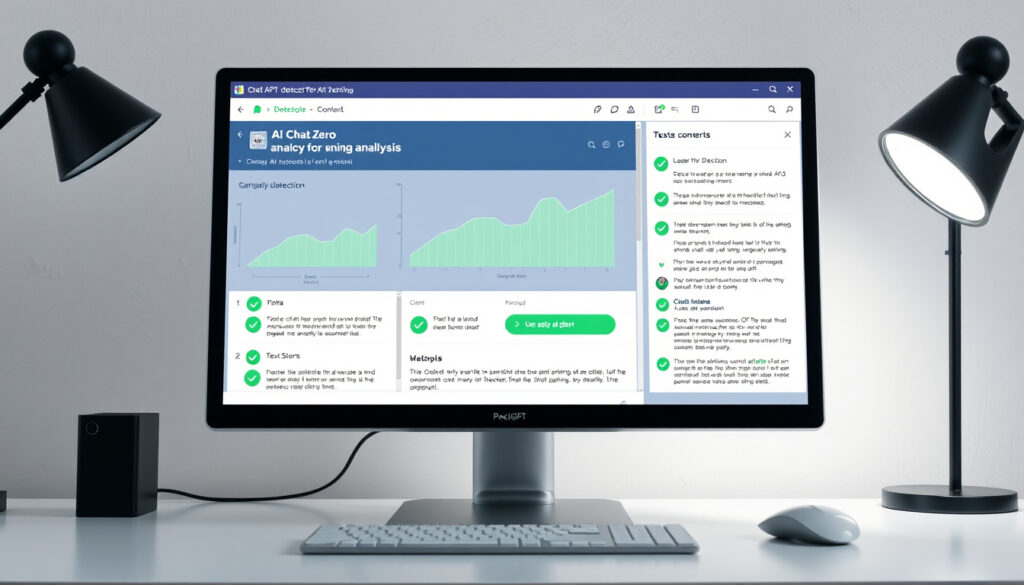
The demand for tools that identify AI-generated content has surged alongside the widespread adoption of large language models. Two platforms have dominated this space: GPTZero and ZeroGPT. Both market themselves as free solutions for detecting text produced by ChatGPT, GPT-5, and similar systems. Yet independent testing reveals significant gaps between promotional claims and actual performance. This analysis examines what these tools do, how accurately they work, and where the technology still falls short.
Educators, publishers, and content teams increasingly seek reliable ways to flag AI-written material. The stakes vary from academic integrity to SEO authenticity. Understanding the strengths and limitations of free detectors helps users set realistic expectations before relying on them for high-consequence decisions.
What is GPT Zero AI Detector?
GPTZero positions itself as the first and leading AI detection platform, launched with a focus on identifying machine-generated prose in educational settings. The service analyzes text submitted through its interface at gptzero.me, evaluating patterns associated with AI writing patterns. The tool claims support for GPT-5, Gemini, and other modern language models, though independent benchmarks specifically testing these newest systems remain limited.
ZeroGPT operates across multiple domains, including a dedicated ChatGPT detector accessible through zerogpt.com and integrations via WhatsApp and Telegram. The platform promotes itself as a trusted solution for writers, teachers, and employers seeking to verify content authenticity.
Detect AI-generated text from ChatGPT, GPT-5, and Gemini models
gptzero.me, zerogpt.com, zerogpt.net
Yes, unlimited scans on free tiers for both platforms
Strong on pure AI text; unreliable on humanized or edited content
Key Insights
- GPTZero achieves 95.7% true positive rate on the RAID benchmark at 1% false positives, but real-world performance drops significantly on edited text.
- ZeroGPT flags human writing as AI in 20-50% of cases, including speeches by recognized human authors.
- Third-party testing reveals false positive rates of 3-10% for GPTZero on non-blog human content.
- Minor paraphrasing reduces GPTZero detection effectiveness by approximately 70%.
- Entropy-based detection methods struggle when text has been rephrased or restructured.
- Winston AI and Originality.ai rank among the most reliable alternatives for professional use.
- Both free tools offer unlimited scans but lack advanced features available on paid tiers.
| Fact | Details |
|---|---|
| Primary Use | AI text detection for ChatGPT, GPT-5, Gemini, and other large language models |
| Free Access | Available via gptzero.me and zerogpt.com with unlimited scans |
| Key Platforms | GPTZero, ZeroGPT, plus ChatGPT custom GPT variant |
| Benchmark Accuracy | GPTZero: 95.7-99% on RAID; ZeroGPT: 73-95% depending on content type |
| False Positive Rate | GPTZero: 3-10%; ZeroGPT: 20-50% on human-written material |
| Humanizer Vulnerability | Both tools easily fooled by minor paraphrasing or deeper edits |
| Best For | Detecting unedited AI output; unreliable for high-stakes decisions |
Is Chat GPT Zero Free?
Both GPTZero and ZeroGPT provide free access through their primary websites. Users can scan unlimited texts without payment, which makes these tools attractive for casual or occasional detection needs. The free tiers serve as entry points, with both platforms offering premium features on paid plans.
GPTZero’s free version includes access to basic detection and human-written reports, while the platform also provides AI tutoring features. ZeroGPT similarly offers unlimited scanning but monetizes through advanced integrations and additional tools accessible to paying subscribers.
The free tier works well for initial testing or casual detection. However, for professional environments requiring documented accuracy or edited AI detection, paid alternatives like Winston AI or Originality.ai typically deliver more reliable results.
It is worth noting that “free” does not equate to “proven.” Both platforms make claims of high accuracy that exceed what independent testing consistently demonstrates. The absence of cost does not diminish the need for verification through multiple sources before making consequential judgments based on detection results.
What You Get Without Paying
- Unlimited text scans across both platforms
- Basic detection confidence scores
- Integration options through ChatGPT’s custom GPT interface
- Multi-language support including detection across various writing styles
- WhatsApp and Telegram access through ZeroGPT
What is Chat GPT Zero Humanizer?
A parallel ecosystem of “humanizer” tools has emerged in response to AI detectors. These services rewrite AI-generated text to reduce detection likelihood. Platforms like Humanize AI and Rewritify AI adjust phrasing, sentence structure, and vocabulary to create output that resembles human writing more closely.
Testing demonstrates that minor paraphrasing reduces GPTZero detection rates by roughly 70%. Deeper edits allow AI content to evade both GPTZero and ZeroGPT almost entirely. This creates an ongoing competition between detection tools and evasion methods, with neither side achieving permanent advantage.
How Humanizers Work
Humanizer tools apply various transformation techniques to AI-generated text. These include synonym substitution, passive-to-active conversions, fragmentation of longer sentences, and insertion of minor grammatical variations. The goal is to introduce enough human-like unpredictability that detection algorithms no longer flag the content reliably.
No available tool fully blocks humanizers. Research indicates that Originality.ai resists humanization attempts better than free alternatives, but even the most accurate platforms show reduced effectiveness against carefully edited text. Organizations relying on AI detection for compliance should factor this vulnerability into their workflows.
Videos and tutorials demonstrating how to bypass detection tools have proliferated across platforms like YouTube. Pattern tweaks, strategic sentence restructuring, and controlled vocabulary changes all contribute to reduced detection rates. This creates practical implications for anyone considering AI detection as a sole verification mechanism.
The Arms Race Dynamic
- Detectors improve through retraining on humanized samples
- Humanizers adapt by analyzing detection patterns
- Neither side maintains consistent advantage
- Professional tools resist evasion better than free options
- Human judgment remains essential for high-stakes content verification
What is Winston AI?
Winston AI ranks among the most frequently recommended alternatives to free detectors. Reviews consistently praise it for lower false positive rates compared to GPTZero and ZeroGPT, particularly when analyzing content that has undergone editing or light humanization. The platform targets professional users including educators, publishers, and enterprise content teams.
Originality.ai frequently appears alongside Winston AI in comparisons, with some sources calling it the most accurate detection tool according to ZDNet’s analysis. Turnitin, the long-established plagiarism detection service, has also expanded into AI detection, adding credibility for academic users considering these tools.
For organizations requiring documented accuracy or audit trails, Winston AI, Originality.ai, and Turnitin offer features absent from free platforms. These include detailed reporting, team collaboration features, and integration options suitable for enterprise deployment. Subscription costs apply, but reliability improves substantially for professional use cases.
Comparing the Options
| Detector | Strengths | Weaknesses | Best For |
|---|---|---|---|
| GPTZero | 99% benchmark accuracy, pure AI detection | 3-10% real-world false positives, fooled by edits | Education, formal texts |
| ZeroGPT | Free, strong on casual AI blogs | 20-50% false positives on human text | Quick blog checks |
| Winston AI | Low false alarms, edited AI spotting | Paid tiers dominant | Professional use |
| Originality.ai | Most accurate per testing, humanizer resistance | Premium pricing | Enterprise verification |
Development Timeline
AI detection tools emerged alongside the commercialization of large language models. The following timeline outlines key developments relevant to understanding the current landscape:
- 2023: GPTZero launches as one of the first publicly available AI detection services, gaining rapid adoption in educational institutions.
- 2023-2024: ZeroGPT and competing platforms enter the market, expanding free access to AI detection technology.
- 2024: Reddit discussions and independent testing reveal significant accuracy limitations, spawning skepticism about detector reliability.
- 2024-2025: Humanizer tools proliferate, demonstrating systematic vulnerabilities in detection approaches.
- 2025: GPTZero claims 99% accuracy for GPT-5 and Gemini detection; independent verification remains limited.
- 2026: Third-party benchmarks like RAID provide standardized accuracy measurements while real-world performance gaps persist.
What Is Certain and What Remains Unclear
Users benefit from understanding precisely what these tools can and cannot deliver. Separating established facts from persistent uncertainties helps prevent misinformed decisions based on detection results.
| Established Information | Unresolved Questions |
|---|---|
| Both platforms offer free unlimited scanning | Actual performance on GPT-5 and Gemini content outside controlled settings |
| GPTZero achieves 95.7% on RAID benchmark with controlled inputs | Long-term detection reliability as language models continue advancing |
| ZeroGPT produces 20-50% false positives on human text | Whether free tiers will introduce limitations as platforms monetize |
| Minor paraphrasing substantially reduces detection rates | How detection tools will adapt to increasingly human-like AI output |
| Paid alternatives outperform free options in independent testing | The timeline for standardized accuracy reporting across the industry |
The Broader Context
The proliferation of AI detection tools reflects broader tensions between automation and authenticity. Content creators, educators, and publishers face increasing pressure to verify the origin of text submitted for evaluation. Detection tools attempt to address this need, though the technology remains imperfect.
Multiple similar tools now populate the market, ranging from feature-rich platforms like Winston AI to basic free detectors requiring minimal technical infrastructure. This variety creates choice but also confusion, as users must navigate promotional claims that often exceed demonstrated capabilities.
The relationship between AI detection and AI generation creates a dynamic where each technology evolves in response to the other. Language models continuously improve at producing human-like text, while detection systems retrain on new patterns. This arms race suggests that perfect detection may remain elusive, and human judgment will continue playing a necessary role in content verification.
Sources and Expert Perspectives
Evaluating AI detection tools requires attention to both promotional materials and independent analysis. The following perspectives shape current understanding:
“First and leading AI detector” — GPTZero positions itself as the pioneer in the space, though multiple competitors now offer similar capabilities.
— gptzero.me marketing materials
“It is impossible to reliably detect AI-generated text” — Skeptical perspectives from community discussions highlight fundamental limitations of entropy-based detection approaches.
— Community discussions on AI detection reliability
“No tool fully blocks humanizers; Originality.ai resists better” — Independent analysis confirms that humanization tools create meaningful vulnerabilities across available detection platforms.
— Comparative testing reviews
Summary and Recommendations
GPTZero and ZeroGPT provide accessible entry points for AI text detection, particularly for users who need basic screening without financial commitment. Both platforms deliver reasonable accuracy on unedited AI output but show significant vulnerabilities when content has been paraphrased or humanized. Organizations requiring reliable detection for consequential decisions should consider professional alternatives, as document checklist tools and verification workflows increasingly include AI detection as one component rather than a definitive solution.
Testing remains essential before trusting any single tool for high-stakes applications. Cross-referencing results across multiple platforms, understanding the limitations documented through independent testing, and maintaining human oversight all contribute to more effective verification practices. The technology continues improving, but current accuracy rates do not yet support uncritical reliance on any available detector.
Frequently Asked Questions
What is the best AI detector?
Winston AI and Originality.ai rank among the most accurate according to independent testing. For free options, GPTZero outperforms ZeroGPT on formal text but both show significant limitations on edited or humanized content.
What is an AI detector?
An AI detector is software that analyzes text to identify patterns characteristic of machine-generated content. These tools use algorithms to evaluate writing style, vocabulary patterns, and statistical properties that may indicate AI origin.
What is Humanize AI?
Humanize AI is a tool that rewrites AI-generated text to reduce the likelihood of detection. It applies various transformation techniques to make content appear more human-written by adjusting phrasing, sentence structure, and word choice.
What is Rewritify AI?
Rewritify AI is another humanizer tool designed to help AI-generated content evade detection platforms. Like similar services, it modifies text through paraphrasing and structural changes to introduce human-like variations.
Can AI detectors be fooled?
Yes. Minor paraphrasing reduces detection rates substantially, and deeper edits can allow AI content to evade most available tools. No current detector fully blocks sophisticated humanization attempts.
Are free AI detectors accurate?
Free detectors work reasonably well on unedited AI text but show false positive rates of 3-50% on human-written content. They are not reliable enough for high-stakes decisions without additional verification.
How does GPTZero work?
GPTZero uses entropy-based analysis, evaluating patterns like perplexity and burstiness in text. These metrics measure predictability and variation in writing style, with AI-generated text typically showing lower variation.
Is Winston AI better than free options?
Winston AI demonstrates lower false positive rates and better detection of edited AI content compared to free platforms. Professional users and organizations typically prefer it for documented accuracy and reporting features.
Related stories



Jack Hayes is Senior Reporter at Oz Monitorly, covering breaking stories and explainers.