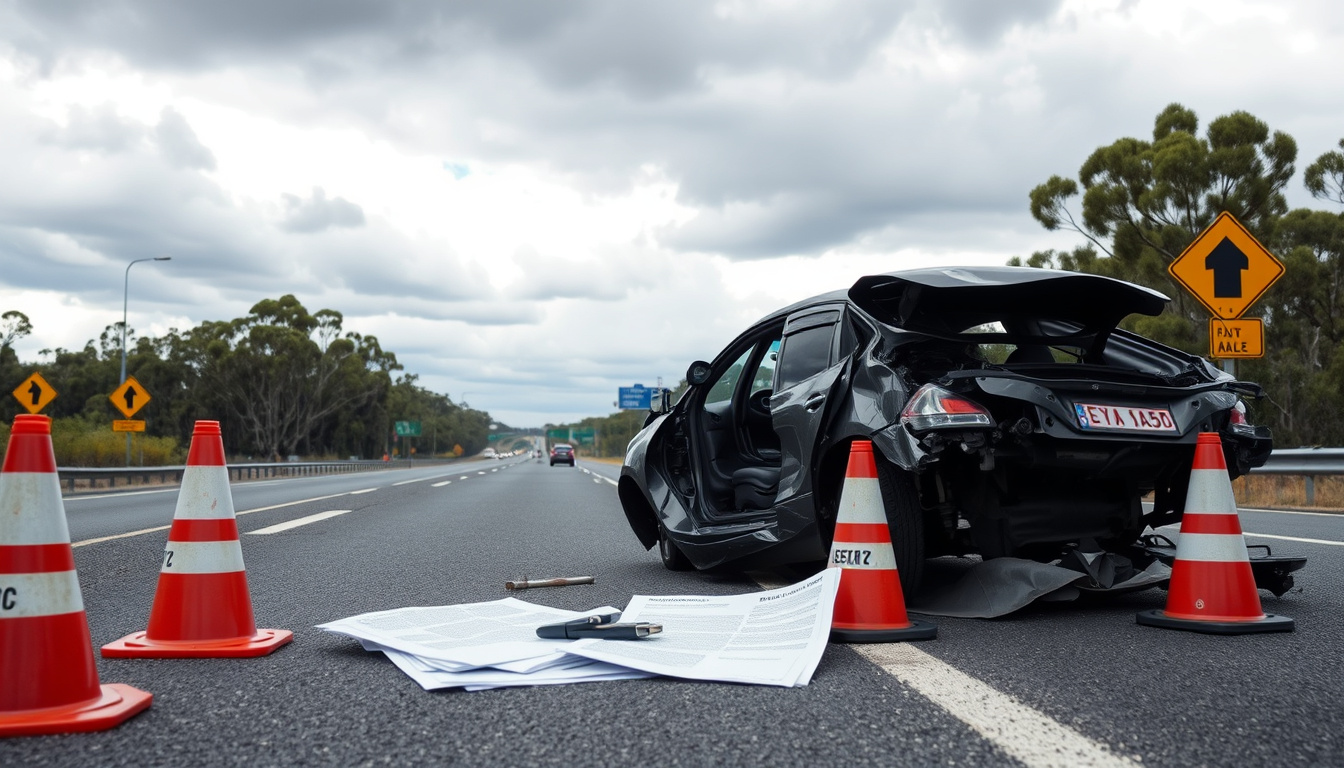

The Motor Accident Compensation Act 1999 established New South Wales’ Compulsory Third Party insurance framework, creating a system where drivers involved in motor vehicle accidents could access compensation regardless of fault. This legislation shaped how injured parties pursued claims and received benefits for decades before significant reforms altered the scheme’s structure in 2017.
For accidents occurring from 1 December 2017, the Motor Accident Injuries Act 2017 replaced the earlier framework, introducing a no-fault benefits system administered by the State Insurance Regulatory Authority. Understanding these laws remains essential for anyone navigating compensation claims following a motor vehicle incident in NSW.
What is the Motor Accident Compensation Act?
The Motor Accidents Compensation Act 1999 governed NSW’s Compulsory Third Party insurance scheme for road accidents occurring before 1 December 2017. Under this framework, injured persons could seek damages through the civil court system, with fault playing a central role in determining eligibility and quantum of compensation.
CTP insurance, commonly known as green slip insurance, remains mandatory for all registered vehicle owners in NSW. The scheme ensures that victims of motor vehicle accidents have access to compensation regardless of whether the at-fault driver can afford to pay personally.
The State Insurance Regulatory Authority licenses and oversees insurers operating within the CTP framework. For accidents before December 2017, the Motor Accidents Compensation Act continues to apply, meaning older claims still operate under those provisions.
| Aspect | Details |
|---|---|
| Enacted | 1999 (NSW) |
| Administered by | SIRA (State Insurance Regulatory Authority) |
| Core mechanism | CTP no-fault statutory benefits |
| Coverage | All registered vehicles in NSW |
- The Motor Accidents Compensation Act 1999 applied to accidents before 1 December 2017
- Compulsory Third Party insurance provides fault-independent coverage
- SIRA oversees the scheme through Motor Accident Guidelines
- Benefits include income support, treatment costs, and care expenses
- Motor Accident Injuries Act 2017 reformed the scheme for newer accidents
CTP stands for Compulsory Third Party insurance. This mandatory coverage protects drivers who may cause injury to others on NSW roads. The term reflects that the policyholder (first party) purchases protection against claims from those injured (third parties).
How do I make a claim under the Motor Accident Compensation Act?
The claims process under the current Motor Accident Injuries Act framework involves several sequential steps designed to assess liability and determine appropriate benefits. For accidents from 1 December 2017, the following process applies through the CTP insurer of the at-fault vehicle.
Step-by-step claims procedure
The first requirement involves obtaining a certificate of capacity or fitness from a medical practitioner. This document establishes the nature and extent of injuries sustained and forms the foundation of any claim submission.
Once a certificate is obtained, injured persons must lodge a personal injury benefits application with the relevant CTP insurer. If the at-fault vehicle cannot be identified, the application proceeds through the insurer of the claimant’s own vehicle under the nominal defendant provisions.
Insurers must respond to applications within four weeks, accepting or denying liability. When claims are accepted, benefit payments commence within 14 days of acceptance.
A second liability notice, addressing both fault determination and threshold injury classification, must be issued within nine months of claim lodgement. This represents an extension from the previous three-month requirement, effective for accidents from 1 April 2023.
Dispute resolution pathways
When disagreements arise regarding liability assessments or benefit calculations, disputes progress through merit reviewers, medical assessors, or the Personal Injury Commission. Notably, disputes concerning permanent impairment no longer require internal review before escalating to external bodies.
Statutory benefits applications should be lodged within 28 days to preserve rights to backdated income support from the accident date. Court proceedings for damages claims must commence within three years of the accident, though no waiting period applies for threshold injury claims.
For comparison with other Australian jurisdictions, the Queensland Motor Accident Insurance Commission oversees a similar no-fault framework, though specific benefit durations and thresholds differ between states.
What are no-fault benefits and who is eligible?
No-fault benefits under the Motor Accident Injuries Act provide statutory compensation to injured persons regardless of who caused the accident. This contrasts with earlier fault-based systems where proving negligence was essential to recovering damages.
Benefit categories and durations
All eligible claimants receive up to 52 weeks of statutory benefits from the accident date. This represents an extension from the previous 26-week maximum, implemented through amendments effective 1 April 2023 for post-date accidents.
Income support calculations reflect pre-accident earnings patterns. The first 13 weeks of benefits amount to 95% of pre-accident income, followed by 80-85% thereafter until the 52-week maximum is reached.
Treatment and care costs receive coverage through the statutory benefits framework. These include medical expenses, rehabilitation services, and necessary attendant care requirements resulting from accident injuries.
Threshold injuries and limitations
Threshold injuries, such as soft tissue damage without significant permanent impairment, receive a defined set of benefits but are excluded from common law damages claims unless permanent impairment exceeds specified thresholds. The greater than 10% whole person impairment threshold applies to certain categories of claims.
At-fault drivers maintain eligibility for the 52-week benefit period, though their compensation remains subject to the same statutory framework as other claimants. For accidents before April 2023, at-fault drivers were limited to 26 weeks of benefits.
- Income support: 95% of pre-accident earnings for weeks 1-13
- Subsequent weeks: 80-85% of pre-accident earnings
- Maximum benefit duration: 52 weeks for at-fault and threshold injury claimants
- Treatment costs: Covered under statutory benefits regardless of fault
- Care expenses: Included for eligible claimants requiring assistance
Weekly benefit reductions for contributory negligence now apply only after 52 weeks rather than 26 weeks, and only for claimants less than 61% at fault. These changes took effect from 1 April 2023 for post-date accidents, providing extended protection during the initial recovery period.
Who administers the scheme and what are key changes?
The State Insurance Regulatory Authority administers the Motor Accident Injuries Act scheme, issuing Motor Accident Guidelines that govern insurer operations and claims processing. Version 10 of these guidelines commenced on 15 September 2025, with version 10.1 following on 12 December 2025 to reflect further refinements.
Major legislative amendments
The Motor Accident Injuries Amendment Act 2022 introduced significant changes effective 1 April 2023 for accidents occurring on or after that date. These reforms extended benefit durations, adjusted liability notice timeframes, and modified settlement restrictions that previously constrained claimant access to common law remedies.
Key amendments included removal of the 20-month waiting period before commencing damages claims. Previously, claimants faced substantial delays before pursuing lump sum compensation; this barrier no longer applies to post-April 2023 accidents.
The two-year settlement moratorium requiring greater than 10% whole person impairment was also removed, allowing threshold injury claimants earlier access to common law damages processes.
2025 and 2026 developments
SIRA’s 2025 review of the CTP scheme highlighted benefits including earlier access to damages and enhanced rehabilitation supports. The review identified areas for ongoing refinement while acknowledging the scheme’s effectiveness in providing timely compensation to accident victims.
The Statute Law (Miscellaneous Provisions) Act (No 2) 2025 takes effect from 18 February 2026, amending the ‘medical dispute’ definition in section 7.17 of the Motor Accident Injuries Act. These changes also clarify roles under the legacy Motor Accidents Compensation Act for pre-2017 accident claims.
The Motor Accidents Compensation Act 1999 continues to apply to accidents occurring before 1 December 2017. Claims arising from these older incidents remain subject to the fault-based liability framework and common law damages provisions that characterised the original scheme.
Timeline of key legislative developments
- 1999: Motor Accidents Compensation Act enacted, establishing fault-based CTP framework for NSW
- 1 December 2017: Motor Accident Injuries Act commenced, introducing no-fault statutory benefits system
- 1 April 2023: Motor Accident Injuries Amendment Act 2022 took effect, extending benefits to 52 weeks and modifying liability provisions
- 15 September 2025: Motor Accident Guidelines version 10 commenced
- 12 December 2025: Motor Accident Guidelines version 10.1 released
- 18 February 2026: Statute Law (Miscellaneous Provisions) Act (No 2) 2025 takes effect
What is established versus what remains unclear
| Established information | Information requiring clarification |
|---|---|
| No-fault statutory benefits apply to eligible accident victims from December 2017 | Specific application of greater than 10% whole person impairment threshold across different injury categories |
| 52 weeks represents the maximum benefit duration for at-fault and threshold claimants | Resolution timelines for disputes progressing through merit reviewers and medical assessors |
| SIRA oversees the scheme through Motor Accident Guidelines | Future amendment directions based on ongoing scheme reviews |
| Amendments effective April 2023 changed key eligibility and timing provisions | Precise impact of 2026 legislative changes on specific claim types |
Scheme context and comparisons
NSW’s Motor Accident Injuries Act framework parallels developments in other Australian jurisdictions, particularly Queensland’s Motor Accident Insurance Commission structure. Both systems provide fault-independent statutory benefits, though duration limits and threshold classifications vary between states.
Queensland’s scheme offers income and treatment support for periods ranging from one to five years based on injury severity. NSW’s 52-week maximum for threshold injuries reflects a more structured approach to limiting exposure for minor claims while maintaining robust support for seriously injured claimants.
The regulatory approach through SIRA in NSW and MAIC in Queensland reflects similar insurer-led claims management with external dispute resolution mechanisms. Both jurisdictions have refined their frameworks through periodic legislative amendments addressing emerging operational challenges.
Those navigating compensation schemes may find it helpful to explore Pension Asset Test Australia 2025 Limits as part of understanding broader financial support options available alongside accident compensation.
Sources and official references
Motor Accident Guidelines version 10.1 (2025) provides the operational framework for claims processing under the Motor Accident Injuries Act, with version 10 commencing 15 September 2025 and subsequent refinements taking effect 12 December 2025.
SIRA’s 2025 review of the NSW CTP scheme identified earlier damages access and rehabilitation supports as key benefits, recommending ongoing refinement of scheme parameters to balance claimant access with system sustainability.
Understanding your compensation rights
Navigating the Motor Accident Compensation Act and Motor Accident Injuries Act framework requires attention to time limits, eligibility criteria, and appropriate claim procedures. Whether your accident occurred before or after December 2017 determines which legislative provisions apply to your circumstances.
For those exploring related financial protection mechanisms, understanding broader social support systems complements knowledge of accident compensation schemes. For assistance with claims and eligibility determinations, consulting qualified professionals familiar with current SIRA guidelines remains advisable.
The progression from fault-based liability under the 1999 Act to the no-fault benefits system introduced in 2017 reflects ongoing refinement of compensation frameworks in NSW, balancing claimant access with scheme sustainability.
Those seeking to understand broader financial planning considerations may wish to explore Pension Asset Test Australia 2025 Limits for additional context on social support mechanisms.
Frequently Asked Questions
What happens if the accident is my fault?
At-fault drivers retain eligibility for statutory benefits under the Motor Accident Injuries Act. Benefits are limited to 52 weeks for post-April 2023 accidents, covering income support, treatment costs, and necessary care. Common law damages may be available depending on injury severity and impairment levels.
Can I claim for psychological injuries?
Psychological injuries arising from motor accidents may qualify for statutory benefits if documented by appropriate medical practitioners. Assessment of threshold injury status and permanent impairment levels determines eligibility for common law damages in addition to statutory benefits.
Is there compensation for property damage?
The CTP scheme focuses on personal injury compensation. Property damage claims fall outside the statutory benefits framework and would typically be addressed through other insurance mechanisms, such as comprehensive vehicle insurance policies or common law negligence claims where fault applies.
How long do I have to lodge a claim?
Statutory benefits applications should ideally be lodged within 28 days to preserve full backdating rights. Damages claims through court proceedings must commence within three years of the accident date. The second liability notice deadline is nine months from claim lodgement for post-April 2023 accidents.
What are threshold injuries under the scheme?
Threshold injuries include minor conditions such as soft tissue damage without significant permanent impairment. These injuries receive statutory benefits but are excluded from common law damages unless permanent impairment exceeds specified thresholds, such as greater than 10% whole person impairment for certain claim categories.
Who is the State Insurance Regulatory Authority?
SIRA is the government body responsible for overseeing the Motor Accident Injuries Act scheme in NSW. The authority licenses CTP insurers, issues Motor Accident Guidelines governing claims processing, and monitors scheme performance. The current guidelines version is 10.1, effective from December 2025.
What changes took effect in April 2023?
Amendments effective 1 April 2023 extended statutory benefits from 26 to 52 weeks, increased the second liability notice period from three to nine months, removed the 20-month damages claim waiting period, and eliminated the two-year settlement moratorium for threshold injuries. These changes improved claimant access to compensation.
Related stories



Liam O'Brien covers Australian politics and public affairs for Oz Monitorly.