
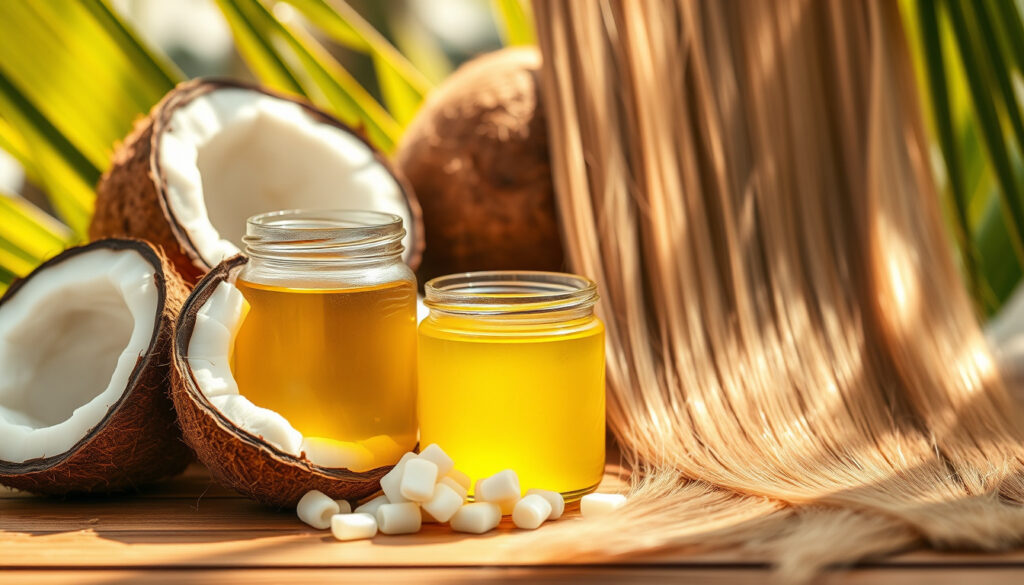
Coconut Oil for Hair: Complete Guide to Benefits and Usage
Coconut oil has earned its reputation as one of the most versatile natural treatments for hair care. Research involving hundreds of patients confirms its ability to reduce hair breakage by up to 41.8%, making it a compelling option for those seeking stronger, healthier strands. Unlike many commercial products, pure coconut oil offers a science-backed approach to moisture retention and damage prevention that has been documented across multiple studies.
The appeal of coconut oil lies in its unique composition. Its high lauric acid content allows it to penetrate the hair shaft more effectively than many other oils, including mineral oil and sunflower oil. This penetration helps prevent both protein loss and moisture loss, two common causes of hair damage. Whether applied as a pre-wash treatment, an overnight mask, or a scalp massage, coconut oil provides benefits that have stood the test of time in both traditional use and modern research.
Understanding how to use coconut oil correctly for your specific hair type and concerns is essential for achieving the best results. The following guide explores the evidence, application methods, and considerations that can help you decide whether coconut oil belongs in your hair care routine.
How to Use Coconut Oil for Hair
Getting the most from coconut oil requires proper application techniques. The method you choose depends on your hair goals, whether you seek deep conditioning, moisture restoration, or scalp health support.
The most common approach involves warming two to three tablespoons of coconut oil until it melts, then applying it to damp or dry hair. Professionals suggest working through the hair section by section, paying particular attention to the mid-lengths and ends where damage typically accumulates. After application, a wide-tooth comb helps distribute the oil evenly before covering the hair with a shower cap.
Core Application Methods
Pre-wash treatment represents one of the most effective uses of coconut oil. Applying it before shampooing creates a protective barrier that prevents damage from washing itself, which can strip natural oils from the hair shaft. Post-wash application works differently, coating the strands to lock in moisture after cleansing.
For a deep conditioning mask, warm the oil slightly and apply generously from roots to tips. Cover with a shower cap and allow it to penetrate for at least thirty minutes, though overnight treatment yields more intensive results for severely dry or damaged hair. The warmth of the shower helps the oil absorb more effectively into the hair shaft.
Scalp massage with coconut oil serves a different purpose. Using one to two tablespoons, massage gently into the scalp using circular motions. This technique stimulates circulation and may support overall scalp health. Leave it on for thirty minutes before washing, or apply overnight for deeper conditioning of the scalp tissue.
For detangling, apply a small amount of coconut oil to the ends of wet hair before combing. This reduces breakage during styling and smooths the cuticle for improved shine.
Key Insights
- Coconut oil reduces protein loss during washing by up to 41.8%, outperforming other natural oils in clinical comparison
- Lauric acid, comprising over 50% of coconut oil’s fatty acids, enables deeper shaft penetration than mineral or sunflower oils
- Studies involving 370 patients across 17 trials confirm reduced breakage and improved scalp hydration
- Pure, unrefined virgin coconut oil provides the most effective treatment compared to processed products
- Application before and after washing provides the most comprehensive damage protection
- Evening application allows deeper absorption, but thorough rinsing is essential to avoid greasiness
- Dermatologists recommend coconut oil particularly for dry, coarse, and damaged hair types
| Property | Detail | Source |
|---|---|---|
| Lauric Acid Content | Over 50% | Composition Analysis |
| Hair Shaft Penetration | Yes, unlike mineral oil | Comparative Studies |
| Protein Loss Reduction | Up to 41.8% | Clinical Research |
| Shelf Life | 2+ years unopened | Storage Guidelines |
| Optimal Application | 30 min to overnight | Usage Studies |
| Frequency Recommended | 1-2 times weekly | Dermatologist Guidance |
Benefits of Coconut Oil for Hair
The benefits of coconut oil for hair extend beyond simple surface conditioning. Research demonstrates several measurable effects that make it particularly valuable for certain hair concerns.
Moisture and Protein Protection
Coconut oil excels at preventing moisture loss from the hair shaft. When applied before washing, it creates a barrier that reduces water absorption during the shampooing process, which subsequently minimizes swelling and damage to the cuticle structure. This same barrier function helps prevent the loss of essential proteins that keep hair strong and elastic.
Unlike lighter oils that coat only the outer surface, coconut oil’s lauric acid content enables it to penetrate the cortex of the hair shaft. This deeper penetration means the benefits last longer and provide actual structural support rather than just temporary shine enhancement.
Damage Prevention
Heat styling, UV exposure, and environmental pollution all contribute to hair damage over time. Coconut oil helps mitigate these factors by forming a protective layer that shields the hair cuticle from thermal damage, sun exposure, and pollutant particles. Cosmopolitan reports that stylists have long recognized this protective quality, which explains why coconut oil has remained popular in traditional hair care practices across many cultures.
For those who regularly use heat styling tools, applying coconut oil before blow-drying or straightening can significantly reduce the cumulative damage that leads to breakage and split ends.
Studies confirm that coconut oil outperforms argan, castor, and olive oils in reducing protein loss and preventing breakage from washing and styling.
Additional Benefits
Beyond moisture and protection, coconut oil offers several secondary benefits worth noting. Its antimicrobial properties make it effective against certain scalp conditions, including dandruff caused by fungal overgrowth. Research has also demonstrated anti-lice effects in multiple studies, with coconut oil treatment showing efficacy in eight separate trials.
The smoothing effect coconut oil provides extends to frizz reduction and shine enhancement. By coating the cuticle and filling in minor surface irregularities, it creates a sleeker appearance that many users find preferable to commercial smoothing serums.
However, it is important to note that while coconut oil provides substantial benefits for moisture, protection, and damage reduction, evidence for direct hair growth stimulation remains limited. Experts at Prevention advise against viewing coconut oil as a cure-all for thinning hair, emphasizing instead its value as a preventive and restorative treatment for existing strands.
How Long and How Often to Use Coconut Oil for Hair
Timing and frequency play crucial roles in achieving optimal results with coconut oil treatments. Understanding the balance between application duration and frequency helps prevent common issues while maximizing benefits.
Duration Guidelines
The minimum effective duration for a coconut oil treatment is approximately thirty minutes. During this time, the oil absorbs into the hair shaft and cuticle, providing moisture and protection. Thirty minutes suffices for maintenance treatments or when you have limited time available.
For deeper conditioning and more intensive repair, extending the treatment to two to four hours produces better results. However, the most thorough absorption occurs during overnight treatment, making this duration ideal for severely dry or damaged hair.
Overnight application works best when the hair is covered with a shower cap to prevent the oil from transferring to bedding and to create slight warmth that enhances absorption. Restoring Hair SD notes that thorough rinsing is essential after overnight treatments to avoid leaving residue that can make hair appear greasy.
For fine or thin hair, overnight treatments may weigh down strands and create an unwanted greasy appearance. Limiting overnight application to thicker hair types is advisable.
Frequency Recommendations
For coarse, thick, or damaged hair, applying coconut oil one to two times per week provides optimal maintenance. This frequency delivers consistent moisture without buildup that could make hair feel heavy or appear oily.
Those with very dry or chemically treated hair may benefit from increasing frequency to three times weekly, particularly during harsh weather conditions or after significant heat styling. However, daily application is generally not recommended, even for very dry hair, as excessive oil can accumulate and become difficult to remove.
Fine hair types should limit application to once weekly at most, and even then, focusing primarily on the ends rather than the roots. The scalp area is often better avoided entirely for those with fine or thinning hair, as excess oil near the roots can accelerate a greasy appearance.
Is Coconut Oil Safe for All Hair Types?
Coconut oil provides excellent benefits for many hair types, but suitability varies significantly depending on your specific hair characteristics and concerns. Understanding these differences helps prevent disappointment and ensures you use the product appropriately.
Best Matches: Dry, Damaged, and Coarse Hair
Coconut oil performs exceptionally well for dry and damaged hair. Monday Haircare reports that coconut oil restores moisture, heals breakage, and adds shine for these types, making it an excellent choice for restorative treatments. Coarse and thick hair textures also respond well, with the oil penetrating effectively without creating excessive greasiness. For more information on this topic, you can refer to Distilled water Woolworths David Gray’s.
Curly and textured hair types particularly benefit from coconut oil’s moisture-retaining properties. The oil helps define curls, reduce frizz, and improve manageability without the crunchiness that some commercial styling products create.
Colored and Chemically Treated Hair
Coconut oil can benefit colored hair by coating the shafts and helping seal in color while protecting against environmental damage that causes fading. However, those with color-treated hair should test for potential buildup, particularly with darker or more processed colors where residue may become visible.
For chemically treated hair, including relaxers, perms, or keratin treatments, coconut oil provides valuable moisture restoration that counteracts the drying effects of these processes. Apply it between treatments rather than immediately after chemical processing.
Test coconut oil on a small section first if you have color-treated hair. Some users notice buildup that affects color brightness, particularly with lighter shades.
Hair Types Requiring Caution
Fine, thin, or straight hair types face greater challenges with coconut oil. Estece Center advises that the oil can be too heavy for these textures, weighing down strands and creating an unwanted greasy appearance that is difficult to style.
Those with naturally oily hair or an oily scalp should also exercise caution. Coconut oil applied near the scalp can exacerbate oiliness, leading to rapid accumulation and frequent washing that defeats the purpose of treatment. When used by oily hair types, application should focus exclusively on the mid-lengths and ends.
Side Effects and Risks
Pure coconut oil presents minimal risks for topical use. Research published by the Scarring Alopecia Forum confirms that no major allergies have been documented for coconut oil applied to hair or scalp.
However, potential issues include greasiness or buildup if overused, difficulty removing the oil which may require double shampooing, and residue on bedding if applied before sleep. A small patch test is recommended for those with sensitive skin, as rare instances of scalp irritation can occur.
Users should also be aware that coconut oil is not a miracle growth treatment. While it creates optimal conditions for healthy hair growth by improving scalp health and reducing breakage, evidence for direct stimulation of new hair growth remains limited.
The Application Process: Step by Step
A consistent application process ensures you achieve the best results from coconut oil treatments. Following these steps systematically helps develop an effective routine tailored to your hair’s needs.
- Prepare your hair: Start with dry or slightly damp hair, depending on whether you prefer a pre-wash or post-wash treatment. Ensure hair is free from tangles for even distribution.
- Warm the coconut oil: Scoop two to three tablespoons into your palm and rub your hands together. Body heat is usually sufficient to melt solid coconut oil into a spreadable consistency.
- Section your hair: Divide hair into four to six sections for thorough application. This prevents missed areas and ensures even coverage from roots to tips.
- Apply the oil: Starting at the scalp if treating for moisture (or at the mid-lengths for fine hair), work the oil through each section. Focus on areas prone to dryness or damage.
- Distribute evenly: Use a wide-tooth comb to distribute the oil from roots to ends. This ensures no section receives excessive oil while others remain untreated.
- Cover and wait: Place a shower cap over treated hair. For thirty-minute treatments, sit under a warm dryer or wrap in a warm towel. For overnight treatment, simply sleep with the cap in place.
- Shampoo thoroughly: Remove the cap and shampoo with warm water. Most users need to shampoo twice to remove all traces of oil, particularly after overnight treatment.
- Style as usual: After rinsing completely, style your hair normally. You may notice improved manageability and shine immediately after treatment.
What Research Confirms and What Remains Unclear
Separating proven benefits from areas of ongoing research helps set realistic expectations for coconut oil treatments.
| Established Benefits | Areas of Ongoing Research |
|---|---|
| Reduces hair breakage by up to 41.8% | Direct hair growth stimulation |
| Minimizes protein loss during washing | Optimal application frequency for individuals |
| Penetrates hair shaft more effectively than mineral oil | Long-term effects on hair structure |
| Improves scalp hydration | Specific mechanisms of lauric acid penetration |
| Demonstrates anti-lice effects in 8 studies | Comparative effectiveness across ethnic hair types |
| Protects against heat and UV damage | Ideal oil temperature for application |
Research from seventeen studies involving 370 patients consistently demonstrates coconut oil’s effectiveness for moisture retention, breakage reduction, and scalp health. However, the extent to which coconut oil promotes new hair growth remains scientifically uncertain. Most experts view its growth-related benefits as indirect, occurring through improved scalp conditions and reduced breakage rather than direct stimulation of the hair follicle.
Expert Perspectives and Historical Context
The use of coconut oil for hair care is not a modern innovation. Hairstylists and dermatologists have recognized its value for centuries, with traditional hair oiling practices across various cultures incorporating coconut oil as a primary ingredient long before scientific research validated these uses.
Dermatologists including Dr. Turner, Dr. Lal, and Dr. Luke have recommended coconut oil for patients with dry or coarse hair, noting improvements in moisture, shine, and overall hair health. Prevention highlights expert endorsement for coconut oil’s benefits particularly for scalp conditions like dandruff relief and general moisturizing.
Professional stylists consistently favor pure coconut oil over products containing coconut oil as an ingredient among many others. The concentrated form provides more predictable results and allows for customizable application based on individual hair needs.
Coconut oil remains one of the most researched natural oils for hair care, with evidence supporting its use for moisture, protection, and damage prevention. However, it works best as part of a comprehensive hair care approach rather than a standalone solution.
Key Takeaways
Coconut oil offers proven benefits for hair, particularly for those with dry, damaged, coarse, or curly hair types. Its unique ability to penetrate the hair shaft and reduce protein loss sets it apart from many commercial alternatives. Research confirms breakage reduction of up to 41.8%, making it valuable for preventing further damage and improving overall hair health.
Application methods range from quick thirty-minute treatments to overnight masks, with frequency typically advised at one to two times weekly. Those with fine or oily hair should use caution and limit application to the ends rather than the scalp to prevent weighing down strands. Pure virgin coconut oil provides the most effective treatment, and thorough shampooing after application ensures removal of all residue.
While coconut oil excels at moisture retention, protection, and damage prevention, expectations for direct hair growth stimulation should remain modest. The treatment works best as part of a balanced hair care routine that addresses your specific concerns. Rose Hip Vital Benefits offers complementary information on other natural oils that may support your hair care goals.
Frequently Asked Questions
What is the best coconut oil for hair treatment?
Unrefined virgin coconut oil provides the purest form with maximum nutrient retention. Avoid products with added ingredients or fragrances that may irritate the scalp.
Does coconut oil make hair grow faster?
Evidence for direct growth stimulation is limited. Coconut oil supports healthy hair by reducing breakage and improving scalp condition, which may create better conditions for growth.
Can coconut oil damage hair?
Pure coconut oil is generally safe, but overapplication can cause greasiness, buildup, and weighed-down strands, particularly for fine or oily hair types.
How do I wash out coconut oil completely?
Most people need to shampoo twice with warm water to remove coconut oil fully. Adding a small amount of baking soda to the first wash can help break down the oil.
Can I use coconut oil on my scalp every day?
Daily scalp application is not recommended, especially for oily hair. One to two times weekly provides benefits without excessive buildup.
Is coconut oil safe for colored hair?
Yes, it can protect colored hair from fading and environmental damage, but test for buildup first as some users report residue affecting color brightness.
How does coconut oil compare to argan oil for hair?
Coconut oil has stronger evidence for breakage reduction and protein protection. Argan oil is lighter and may be preferable for fine hair, but coconut oil generally outperforms in clinical comparisons.
Related stories



Liam O'Brien covers Australian politics and public affairs for Oz Monitorly.