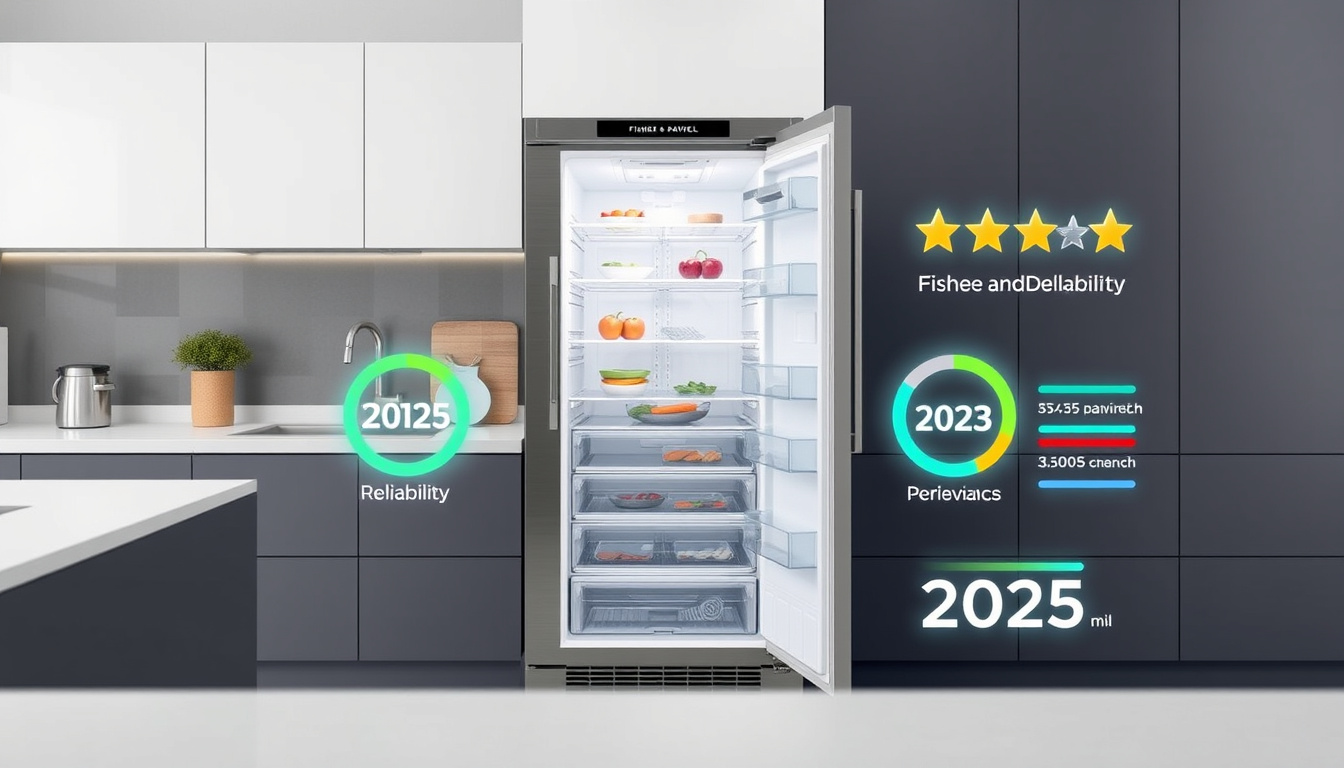
Fisher & Paykel refrigerators occupy a distinctive position in the premium appliance market, combining New Zealand engineering heritage with adaptive cooling technology marketed under the ActiveSmart brand name. The manufacturer, now owned by Chinese conglomerate Haier following its 2012 acquisition, produces a range of configurations from compact bottom-mount units to full-height integrated column refrigerators designed for seamless kitchen cabinetry integration. Consumers researching these appliances frequently seek clarity on reliability metrics, common failure points, model recommendations, and service coverage, particularly within the Australian market where the brand maintains strong retail presence. For more details on the brand’s current product offerings, visit fisherpaykel.com.
This assessment consolidates available reliability data from Consumer Reports member surveys, aggregated retailer reviews, and documented owner experiences to provide a balanced evaluation of Fisher & Paykel refrigerator performance. The analysis addresses frequently raised concerns regarding cooling inconsistencies, ice maker functionality, and long-term durability while acknowledging gaps in publicly available Australian-specific service data.
Understanding these factors requires examining the brand within the broader premium appliance landscape, where Fisher & Paykel competes against European manufacturers such as Bosch and Miele alongside South Korean giants Samsung and LG.
Are Fisher and Paykel Fridges Reliable?
Reliability assessments from Consumer Reports member surveys position Fisher & Paykel among the stronger performers in the premium refrigerator segment. The brand achieves a predicted reliability score of 68 out of 100, ranking sixth overall among kitchen appliance brands surveyed. This places the manufacturer notably ahead of Samsung, which receives poor ratings particularly regarding ice maker functionality and temperature consistency complaints. French-door and bottom-mount configurations demonstrate the strongest performance metrics during the first five years of ownership, according to the compiled reliability analysis.
Retailer reviews and social media testimonials consistently highlight the sleek integrated aesthetic, thoughtful interior organization, and reported longevity spanning over ten years among some owners. The ActiveSmart technology, which adapts airflow and humidity levels based on usage patterns and door openings, receives particular praise for maintaining stable temperatures. Consumer Affairs entries, however, include complaints regarding perceived cheap build quality relative to the premium price point, indicating a divergence between owner expectations and practical experience.
Industry-wide data indicates that approximately 31 percent of refrigerators across all brands experience ice maker issues by year five, a context that frames Fisher & Paykel performance against broader market trends rather than isolated brand deficiencies. The brand’s strong positioning in early ownership satisfaction reflects reliable initial performance, though documented concerns emerge regarding specific component functionality over extended periods.
Key Insights from Reliability Data
- Ranks sixth among surveyed kitchen appliance brands with 68/100 predicted reliability score
- Outperforms Samsung and many mass-market competitors in early ownership satisfaction
- French-door and bottom-mount configurations show strongest five-year performance
- ActiveSmart technology receives consistent praise for temperature stability
- Integrated models noted for solid panel performance and flush installation quality
- Industry-wide ice maker failures affect roughly 31% of units by year five
- Lifespan averages 10-20 years with documented cases of reliable operation beyond a decade
Comparative Reliability Snapshot
| Aspect | Fisher & Paykel | Comparison Notes |
|---|---|---|
| Reliability (5-year predicted) | 68/100 (top 6 brands) | Samsung: Poor ratings for ice maker and temperature control |
| Ice Maker Performance | Slow (8 cubes per 3-4 hours) | Failure rates common across all brands by year five |
| Energy Efficiency | High (ActiveSmart system) | FP excels in temperature stability compared to competitors |
| Owner Satisfaction | Strong retailer ratings | Lower satisfaction observed for competing French-door brands |
| Build Quality Perception | Mixed reviews | Some owners cite cheap materials at premium prices |
| Long-term Durability | 10-20 year lifespan reported | Some units exceed a decade of reliable service |
What Are Common Fisher and Paykel Fridge Problems?
Documented owner experiences and review aggregations reveal several recurring concerns with Fisher & Paykel refrigerators, though the severity and frequency of these issues vary considerably across different model configurations and usage patterns. Understanding these potential failure points enables prospective purchasers to make informed decisions and facilitates proactive maintenance awareness for existing owners.
Many reported cooling problems trace to blocked ventilation systems, particularly in toe-kick areas. Custom panel installations that impede airflow may compromise cooling performance and potentially void warranty coverage. Consulting a certified technician before modifying ventilation pathways is strongly recommended.
Ice Maker Functionality Concerns
The ice maker represents the most frequently cited operational concern across Fisher & Paykel refrigerator models. Production rates fall below manufacturer specifications in practice, with typical output measuring approximately 8 cubes per three to four hours rather than the theoretically achievable faster rates. Panel-ready integrated models lack built-in dispensers entirely, while stainless steel finished units generally incorporate water dispensers alongside ice production capability. The ice maker assembly is removable but occupies valuable freezer space when extracted, creating a trade-off between ice production capacity and storage flexibility.
Temperature and Cooling Irregularities
Cooling performance issues most commonly arise from ventilation pathway obstructions rather than compressor or refrigerant failures. The toe-kick ventilation system, designed to circulate air beneath the refrigerator, must remain unobstructed for proper heat dissipation and cooling efficiency. Custom cabinetry installations that encroach upon these ventilation pathways risk both performance degradation and warranty invalidation. Service technicians report that many “not cooling” service calls resolve through ventilation assessment rather than component replacement.
Storage and Structural Limitations
Interior shelf configurations exhibit reduced depth and weight capacity compared to some competing premium brands, with documented instances of shelf bowing under heavy load conditions. Column refrigerator installations may experience alignment shifting over extended periods, potentially affecting door sealing and overall efficiency. The limited freezer depth of 11 to 12 inches in certain configurations restricts storage of larger items, requiring creative arrangement or alternative storage solutions for bulkier frozen goods.
Regular inspection of door gaskets, condenser coils (where accessible), and ventilation pathways can extend component life and maintain optimal performance. Spill-safe shelf design contains minor liquid incidents but professional cleaning may be required for significant spills affecting sealed compartments.
No specific 2025 error codes or ActiveSmart reset procedures appear in publicly available documentation, indicating that troubleshooting typically requires professional service engagement for complex issues. General refrigerator compressor and ice maker problems noted across the appliance industry apply to Fisher & Paykel models, though the brand’s proprietary error code system remains inaccessible through consumer-facing resources.
Best Fisher and Paykel Fridge Models in 2025
Fisher & Paykel’s 2025 refrigerator lineup spans multiple configurations, with ActiveSmart technology featured across most current models. The selection process requires balancing available kitchen space, storage requirements, aesthetic preferences regarding integrated versus freestanding designs, and budget constraints.
Bottom Mount ActiveSmart (17.5 cubic feet)
The Bottom Mount ActiveSmart configuration represents the entry point into Fisher & Paykel’s refrigerator technology at approximately $2,549. This model offers energy-efficient operation through the adaptive cooling system alongside flexible shelving arrangements accommodating various storage needs. The top-mounted freezer configuration provides accessible frozen goods storage while the primary refrigeration compartment benefits from ActiveSmart humidity and airflow adjustments based on usage patterns.
French Door ActiveSmart (16.9 cubic feet)
Priced at approximately $3,049, the French Door ActiveSmart model features dual doors opening to the refrigeration compartment with a bottom freezer drawer. The airflow calibration system receives particular attention in this configuration, with the design enabling precise temperature distribution across multiple compartments. The French Door format provides wider access to the refrigeration interior compared to single-door configurations, facilitating easier organization and retrieval of stored items.
Series 9 and 11 Column Refrigerators
The premium tier Series 9 and Series 11 column refrigerators incorporate Foodcare zones designed for specialized storage of produce, dairy, and deli items requiring specific temperature and humidity conditions. These built-in configurations demand dedicated ventilation planning during installation, with inadequate airflow compromising performance and potentially voiding warranty coverage. Column installations suit kitchen designs prioritizing seamless aesthetic integration over flexible configuration options.
Integrated and column models require professional installation with particular attention to ventilation clearances. Custom panel attachments that obstruct airflow pathways may result in cooling failures not covered under warranty. Always verify ventilation compliance before completing cabinetry work around these units.
Current market pricing positions French-door models between $3,000 and $7,500, while bottom-mount configurations range from approximately $2,000 to $10,000 depending on capacity, finish, and feature specifications. The wide pricing variance reflects differences between standard and integrated configurations, with panel-ready models commanding premium positioning in the lineup.
Fisher and Paykel Fridge Warranty and Service
Warranty coverage for Fisher & Paykel refrigerators remains consistent with industry standards for premium appliances, though specific terms vary by region and authorized service provider. Ventilation obstruction represents a critical warranty consideration, as modifications or installations that impede the designed airflow pathways may void coverage for cooling-related failures. Understanding what Fisher Paykel warranty coverage includes before purchasing helps avoid costly mistakes during installation.
Warranty Coverage Parameters
Standard warranty periods typically range from two to five years for parts coverage, with compressors occasionally receiving extended coverage beyond the basic warranty term. The specific warranty documentation accompanying each purchase supersedes general industry assumptions, necessitating direct review of provided materials rather than reliance on typical coverage ranges. Australian consumers should verify coverage terms through local authorized dealers or the manufacturer’s regional service documentation.
Service Availability and Considerations
Publicly available sources lack detailed Australian service timeline specifications, error code databases, or regional service variation documentation for Fisher & Paykel products. The available information suggests that global service protocols apply within the Australian market, though localized variations may exist that require direct inquiry with authorized service providers.
Consumer Reports data continues to provide the most comprehensive publicly accessible reliability and satisfaction metrics for informed purchasing decisions. For specific troubleshooting procedures, error code meanings, or service scheduling, consulting directly with Fisher & Paykel customer support or authorized service technicians remains the recommended approach.
The brand’s acquisition by Haier in 2012 introduced questions regarding operational continuity and quality standards, though publicly available reviews do not indicate systematic quality degradation following the ownership transition. Long-term owners frequently report reliable operation exceeding a decade, suggesting that build quality has maintained reasonable consistency through the ownership change period.
Fisher and Paykel Brand Timeline
Understanding the evolution of Fisher & Paykel provides context for evaluating current product offerings and service expectations.
- 1990s: Brand established in New Zealand, focusing on premium domestic appliances with innovative design philosophy
- 2012: Fisher & Paykel Industries acquired by Haier Group, the Chinese multinational appliance manufacturer, introducing new ownership structure while maintaining brand identity
- 2020 and beyond: ActiveSmart II technology launch, representing the second generation of adaptive cooling systems with improved sensor accuracy and energy optimization
- 2024: New integrated model releases featuring enhanced Foodcare zones and refined panel integration systems for premium kitchen installations
Established Facts and Unresolved Questions
Transparency regarding what is definitively known versus what remains uncertain enables readers to calibrate their expectations appropriately when considering Fisher & Paykel refrigerator purchases. Consumer advocacy sources like CHOICE and ProductReview provide valuable Australian-market perspectives alongside international data from Energy Star on efficiency standards.
| Established Information | Unresolved Questions |
|---|---|
| 68/100 Consumer Reports reliability score (top 6 of surveyed brands) | Specific Australian warranty duration terms |
| ActiveSmart adaptive cooling technology improves temperature stability | Regional service response time variations |
| Ice maker production slower than specifications in practice | CHOICE and ProductReview ratings for Australian market |
| Ventilation obstruction voids warranty coverage | Complete error code reference documentation |
| Haier acquisition occurred in 2012 | Specific Australian energy star ratings by model |
| 10-20 year lifespan reported by long-term owners | 2025-specific model updates and releases |
Understanding Fisher and Paykel Market Position
Fisher & Paykel occupies a distinctive niche within the premium refrigerator segment, combining the design heritage of a New Zealand manufacturer with the global manufacturing scale and resources of parent company Haier. This positioning places the brand in direct competition with European premium manufacturers while differentiating through proprietary ActiveSmart technology and distinctive design aesthetics. Exploring how premium fridge brands compare provides useful context for understanding Fisher & Paykel’s place in the market.
The integrated refrigerator category, where Fisher & Paykel has concentrated development effort, serves consumers prioritizing kitchen aesthetic continuity over flexible configuration options. Column refrigerator installations require substantial planning investment, with ventilation requirements, cabinetry integration, and power access considerations demanding professional coordination.
Buyer profiles typically include renovation-focused homeowners investing in premium kitchen builds, design professionals specifying appliances for client projects, and established appliance enthusiasts seeking alternatives to more widely distributed European and Asian brand options. The brand’s smaller market presence compared to Samsung or LG translates to potentially longer service wait times in some regions alongside deeper specialized dealer knowledge.
Sources and Owner Perspectives
Publicly available reviews and survey data provide the primary evidence base for assessing Fisher & Paykel refrigerator performance. The following perspectives represent aggregated findings from multiple review platforms.
“The sleek design and thoughtful organization inside make daily use genuinely pleasant. After three years, the ActiveSmart system continues to maintain consistent temperatures even with frequent door openings.”
— Verified owner review via retailer platform
“Spill-safe shelves contain minor incidents effectively, and the adaptive humidity control keeps produce fresher than our previous refrigerator. The premium price reflects quality materials and thoughtful engineering.”
— HouseRefined long-term review assessment
“Integrated models deliver solid panel performance with genuinely flush installation. The column configuration transforms kitchen aesthetics while maintaining functional refrigeration excellence.”
— Renovation Husbands appliance review series
ConsumerAffairs entries present contrasting perspectives, with some owners citing concerns regarding build quality relative to pricing. These critical assessments provide important balance to positive reviews, suggesting that prospective purchasers should evaluate their specific requirements and tolerance for potential trade-offs before committing to the premium price point.
Making an Informed Purchase Decision
Purchasing a Fisher & Paykel refrigerator warrants careful consideration of multiple factors beyond basic specifications and aesthetics. Prospective buyers benefit from systematic evaluation of their kitchen configuration, storage requirements, and service accessibility alongside brand-specific performance data.
Recommended steps before purchase include verifying model specifications against available kitchen dimensions, confirming authorized dealer service coverage for the local area, reviewing specific warranty terms for the intended model, and examining retailer return policies during the initial ownership period. For those comparing options, exploring Consumer Reports refrigerator reliability rankings provides comparative context against competing brands.
Understanding that no appliance brand offers perfect reliability across all units and configurations enables realistic expectation-setting. Fisher & Paykel’s strong overall reliability positioning combined with documented strengths in temperature management and aesthetic integration makes the brand worthy of serious consideration for consumers prioritizing these attributes, while acknowledging that specific model research and authorized dealer consultation remain valuable steps before commitment.
Frequently Asked Questions
How do I reset a Fisher and Paykel ActiveSmart refrigerator?
Specific ActiveSmart reset procedures are not publicly documented. For error codes or operational concerns, consulting the manufacturer’s support resources or engaging an authorized service technician is recommended. Reset procedures, when available, typically involve powering the unit off for a specified duration and restoring power while monitoring for normal initialization.
Why is my Fisher and Paykel fridge ice maker producing slowly?
Ice maker production rates of approximately 8 cubes per 3-4 hours fall below theoretical specifications in practice, representing a documented characteristic rather than malfunction. Factors including ambient temperature, freezer load, and door opening frequency influence production rates. The assembly is removable but removal eliminates ice production entirely.
What should I expect to pay for a Fisher and Paykel fridge in Australia?
Australian pricing ranges from approximately $2,000 for bottom-mount configurations to over $10,000 for premium integrated column models. French-door options typically fall between $3,000 and $7,500. Specific pricing varies by retailer, model configuration, and finish selection.
What causes Fisher and Paykel fridges to stop cooling properly?
Cooling failures most commonly result from obstructed ventilation pathways, particularly in the toe-kick area. Custom panel installations that restrict airflow may compromise cooling performance. Professional service assessment can determine whether issues stem from ventilation, sealed system components, or electronic controls.
Does Fisher and Paykel warranty cover panel-ready integrated models?
Standard warranty coverage applies but may be voided if custom panels obstruct designed ventilation pathways. Professional installation respecting specified clearances protects both performance and warranty coverage. Specific warranty terms should be reviewed in documentation accompanying the purchased model.
How long do Fisher and Paykel refrigerators typically last?
Documented owner reports indicate typical lifespans of 10-20 years with appropriate maintenance. Reported instances of reliable operation exceeding a decade appear consistently across review platforms, though individual experiences vary based on usage patterns and maintenance practices.
Where can I buy genuine Fisher and Paykel refrigerators?
Authorized Fisher & Paykel dealers represent the primary sales channel, ensuring genuine products with full warranty support. Major appliance retailers and specialized kitchen showrooms typically stock selected models. Purchasing through authorized channels provides access to installation support and service coordination.

Priya Mitchell leads fact-checking, source verification and corrections at Oz Monitorly.