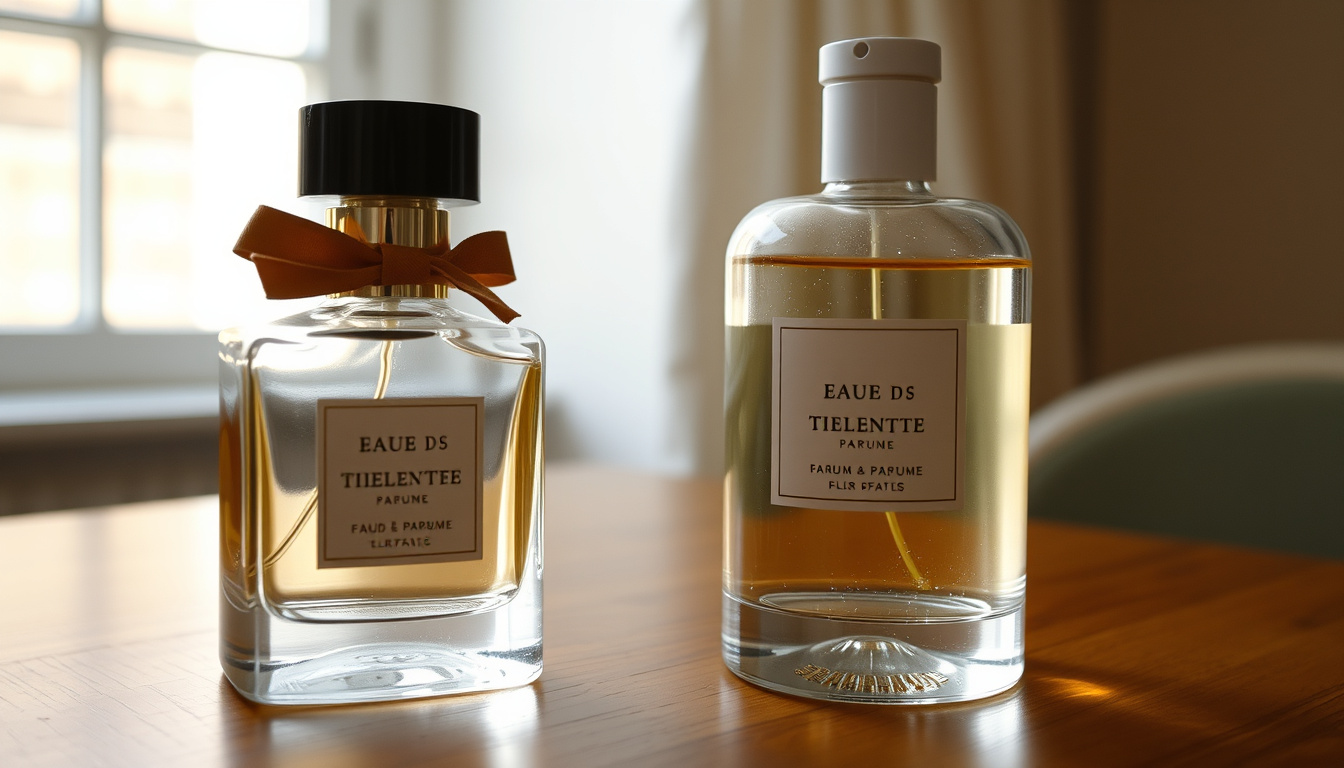
You’ve probably stood at a fragrance counter, sprayed something light and citrusy on your wrist, and wondered: is this an eau de toilette or something stronger? The difference comes down to concentration, and that single number changes how a scent wears, how long it lingers, and what it costs. Eau de toilette typically carries 5–15% fragrance oil, making it the most practical daily choice for anyone who wants a noticeable but not overpowering presence.
Typical fragrance oil concentration: 5-15% ·
Longevity on skin: 2-4 hours ·
Alcohol content: 80-90% ·
Common price range per 100ml: $30-$80 ·
Date of first recorded use: Late 19th century ·
Projection strength: Moderate to light
Quick snapshot
- EDT has 5-15% fragrance oil concentration (Merriam-Webster (definitions authority))
- EDT typically lasts 2-4 hours on skin (The Perfume Shop (retail guide))
- EDT contains 80-90% alcohol (DecantX (fragrance retailer))
- Term originates from French “eau de toilette” meaning grooming water (Merriam-Webster)
- Exact longevity varies dramatically with skin chemistry and environment (Maison Anthony Marmin (perfumery expert))
- Whether EDT is “better” than EDP depends entirely on personal preference and occasion (Intense Oud (fragrance blog))
- Concentration ranges are approximate and vary across brands (Maison Anthony Marmin)
- Late 19th century: EDT introduced as lighter alternative to heavy perfumes (Merriam-Webster)
- 1920s: EDT becomes mainstream daily wear in Europe (Intense Oud)
- 1950s: Mass production and global distribution (The Perfume Shop)
- 1990s: Designer brands push lower price points (DecantX)
- Present: EDT remains top-selling category for casual/daytime use (Intense Oud)
- EDT remains a staple for daily wear, especially in warm climates (Intense Oud)
- Travel-friendly EDT formats (rollerballs, sprays) growing (DecantX)
- Niche and natural EDTs gaining ground among younger buyers (Maison Anthony Marmin)
Six key figures tell the story of EDT: its concentration, longevity, alcohol content, price, history, and projection.
| Attribute | Value |
|---|---|
| Typical oil concentration range | 5-15% |
| Typical alcohol content | 80-90% |
| Average longevity | 2-4 hours |
| Best for | Daytime, office, summer wear |
| Price range (100ml) | $30 – $80 |
| First popularized | Late 19th century, France |
What is the difference between perfume and eau de toilette?
Concentration of fragrance oils
- Eau de toilette: 5-15% fragrance oil (Merriam-Webster)
- Eau de parfum: 15-20% (Twisted Lily (fragrance retailer))
- Parfum/extrait: 20-30% (Methra Shop (fragrance guide))
A buyer choosing EDT over EDP gets a lighter scent but sacrifices half the wear time. For an office worker in a hot climate, that trade-off is often worth it.
Longevity and projection
- EDT lasts 2-4 hours on skin (The Perfume Shop)
- EDP lasts 4-6 hours (Twisted Lily)
- Parfum lasts 6-8+ hours (Methra Shop)
The implication: EDT’s lighter projection means you’ll need to reapply around lunchtime if you want the scent to last through the workday.
Price differences
- EDT: $30-$80 per 100ml (The Perfume Shop)
- EDP: $60-$120 per 100ml (DecantX)
- Parfum: $100-$300+ per 50ml (Methra Shop)
Why this matters: for the same price as a 50ml parfum, you can often buy two 100ml EDTs, giving you variety and more total wear time at a lower cost per day.
Typical usage occasions
- EDT: daytime, office, casual outings, warm weather (Intense Oud)
- EDP: evening events, cooler months, formal occasions (Twisted Lily)
- Parfum: special occasions, date nights, high-impact situations (Methra Shop)
The pattern: EDT fits into a routine where you want a subtle sign of fragrance, not a statement. EDP and parfum are for when you want to arrive announced.
Most fragrance buyers end up with both EDT and EDP in their collection. The EDT handles mornings, commutes, and casual days. The EDP steps in when you want the scent to last through a dinner or event.
The implication: For daily wearers who value subtlety and affordability, EDT is the anchor.
TL;DR: EDT (5-15% oil) is lighter, cheaper, and lasts 2-4 hours — ideal for office and warm weather. EDP and parfum are stronger for evenings and special occasions.
Which is stronger, parfum or toilette?
Concentration comparison
- Parfum: 20-30% fragrance oil (Methra Shop)
- EDT: 5-15% (Merriam-Webster)
Parfum is roughly 2-6 times more concentrated than EDT, depending on the brand. That makes it stronger in both scent intensity and staying power.
Sillage and projection
- Parfum projects strongly for first 2 hours, then fades gradually (The Perfume Shop)
- EDT projects lightly from the start, creating a personal scent bubble (DecantX)
A strong parfum can overwhelm in close quarters like an elevator or small office. EDT’s lighter sillage avoids that risk entirely.
Alcohol content differences
- EDT: 80-90% alcohol (DecantX)
- Parfum: 70-85% alcohol (Maison Anthony Marmin)
The higher alcohol content in EDT makes it feel lighter on skin and evaporate faster, which is why it doesn’t last as long but feels refreshing when sprayed.
TL;DR: Parfum has higher concentration and lasts longer, but EDT’s lighter projection suits close quarters and daily refreshment.
What does eau de toilette mean?
Literal translation from French
“Eau de toilette” literally translates to “toilet water” in English. The term “toilette” refers to the act of washing, dressing, and grooming — not the modern toilet fixture.
The phrase dates to the late 19th century in France, when perfumers created a lighter version of heavy perfumes for use after bathing. It was water for grooming — applied after washing as a freshener, not a statement fragrance.
Modern interpretation
Today, “eau de toilette” means a perfume form that is less concentrated than ordinary perfume but more concentrated than cologne (Cambridge English Dictionary). Retailers commonly describe it as “scented water for body and hair, applied after bathing” (Intense Oud).
The catch: the name sounds odd to modern ears, but the concept — a light, refreshing fragrance for daily grooming — has remained unchanged for over a century.
TL;DR: The term comes from French grooming practice and refers to a lightly scented water for daily use after bathing.
Which is better, EDP or EDT?
When to choose EDT
- For warm weather: EDT’s lighter concentration won’t become cloying in heat (Intense Oud)
- For office: subtle projection won’t bother colleagues (The Perfume Shop)
- For daily wear: lower price per ml means you can use it liberally (DecantX)
When to choose EDP
- For evening events: stronger sillage makes a lasting impression (Twisted Lily)
- For cooler months: heavier scent clings better in cold air (The Perfume Shop)
- For all-day wear: one application lasts through work and dinner (Maison Anthony Marmin)
Factors: occasion, season, skin chemistry
No single format is universally “better.” Skin chemistry affects how long any fragrance lasts — some people get 6 hours out of an EDT, others only 2 (Maison Anthony Marmin). Season, humidity, and activity level all play a role. The smart approach: own one EDT for daily wear and one EDP for special occasions.
Most fragrance buyers end up with both EDT and EDP in their collection. The EDT handles mornings, commutes, and casual days. The EDP steps in when you want the scent to last through a dinner or event.
The implication: For the daily wearer in a shirt-and-tie office or a humid climate, the practical verdict is clear: pick an EDT that you enjoy, reapply once after lunch, and save the EDP for evenings out.
TL;DR: EDT is better for warm weather and budget; EDP is better for evenings and cooler months.
Is eau de toilette for clothes or skin?
Application on skin
EDT is designed for skin, especially pulse points: wrists, neck, behind ears, inner elbows (DecantX). Body heat helps diffuse the scent throughout the day.
Application on clothes
Yes, but with caution. EDT’s alcohol content can stain delicate fabrics (silk, wool) or leave residue (Intense Oud). If you spray on clothing, test on an inconspicuous area first and hold the bottle at least 6 inches away.
Best practices for longevity
- Apply to moisturized skin — unscented lotion first (DecantX)
- Layer with matching scented body wash or deodorant (The Perfume Shop)
- Reapply midday — EDT’s 2-4 hour window means a touch-up is expected (Intense Oud)
The takeaway: treat EDT as a morning refresh that you can top up. It’s not a set-and-forget fragrance — but that flexibility is exactly why it works for daily life.
TL;DR: Apply EDT to pulse points on skin; reapply midday for best longevity. Avoid spraying on delicate fabrics.
Three concentrations, one pattern: higher oil equals longer wear, higher price, and stronger projection.
| Attribute | Eau de Toilette | Eau de Parfum | Parfum (Extrait) |
|---|---|---|---|
| Fragrance oil concentration | 5-15% | 15-20% | 20-30% |
| Alcohol content | 80-90% | 75-85% | 70-85% |
| Average longevity (skin) | 2-4 hours | 4-6 hours | 6-8+ hours |
| Projection | Moderate to light | Strong | Very strong |
| Typical price (100ml) | $30-$80 | $60-$120 | $100-$300+ (50ml) |
| Best occasion | Daily, office, summer | Evening, cooler months | Special events |
The implication: if you need a fragrance that won’t overwhelm a 9-to-5 setting and you’re on a budget, EDT wins on both fronts. Only invest in parfum if you want a long-lasting scent for high-impact occasions and don’t mind the premium.
Two tables are better than one: this second table zooms into the exact concentration ranges cited by different authoritative sources.
| Source | EDT range | EDP range | Parfum range |
|---|---|---|---|
| Merriam-Webster | Lower than ordinary perfume | Not specified | Ordinary perfume |
| Cambridge Dictionary | Stronger than cologne, weaker than EDP | Stronger than EDT | Not specified |
| The Perfume Shop (retail) | 5-12% | 15-20% | 20-30% |
| Twisted Lily (retail) | 5-15% | 15-20% | 20-30% |
| DecantX (retail) | 5-15% | 15-20% | 20-30% |
| Maison Anthony Marmin (expert) | Approximate, varies | Approximate, varies | Approximate, varies |
The catch: no universal standard exists. A 15% EDT from one house might feel stronger than a 12% EDP from another. Trust your nose over the label.
Confirmed facts
- EDT contains 5-15% fragrance oil (Merriam-Webster)
- EDT lasts 2-4 hours on skin (The Perfume Shop)
- EDT has higher alcohol content than parfum (DecantX)
- Term originates from French grooming practice (Merriam-Webster)
What remains unclear
- Exact longevity varies widely with skin chemistry (Maison Anthony Marmin)
- Concentration ranges are not standardized across brands (Maison Anthony Marmin)
- Whether EDT or EDP is “better” depends on personal preference and season (Intense Oud)
- Retailer-reported concentration figures sometimes conflict with perfumers’ own specs (Maison Anthony Marmin)
“Eau de toilette is a perfumed liquid with a lower percentage of fragrant oils than ordinary perfume.”
Merriam-Webster (dictionary authority)
“Eau de toilette is a perfume that is stronger-smelling and longer-lasting than cologne, but not as strong as eau de parfum.”
Cambridge English Dictionary (language authority)
“Eau de toilette is scented water for body and hair, applied after bathing.”
Intense Oud (fragrance editorial)
“The concentration of eau de toilette is around 6-9%, compared to eau de parfum at 10-20%.”
The Perfume Shop (specialist retailer)
For anyone shopping for a fragrance they’ll wear to work, on weekends, or in warm weather, the choice is not really between EDT and EDP — it’s between a scent that supports your day and one that demands attention. EDT gives you the first, at a lower cost, with more reapplication freedom. For the daily wearer in a shirt-and-tie office or a humid climate, the practical verdict is clear: pick an EDT that you enjoy, reapply once after lunch, and save the EDP for evenings out.
youtube.com, shop.perfumersapprentice.com, en.wikipedia.org, leparfummagazine.com
För att förstå skillnaderna på djupet är det bra att först bekanta sig med the meaning of eau de toilette och dess placering i dofthierarkin.
Frequently asked questions
What does eau de toilette smell like?
EDT can smell like anything — floral, citrus, woody, aquatic. The concentration doesn’t dictate the scent family, only its strength and longevity. The same fragrance can exist as both EDT and EDP.
Can you wear eau de toilette every day?
Yes. EDT is specifically designed for daily use. Its lighter projection makes it suitable for office, school, and social settings where heavy perfume might be intrusive.
Is eau de toilette the same as cologne?
No. Cologne (Eau de Cologne) has even lower concentration (2-5%) and lasts about 1-2 hours. EDT is stronger than cologne but weaker than EDP.
Does eau de toilette last longer than body spray?
Yes. Body sprays have very low oil concentration (often <2%) and last 30 minutes to 1 hour. EDT typically lasts 2-4 hours, making it a clear step up.
How should I store eau de toilette?
Store EDT in a cool, dark place away from direct sunlight and temperature fluctuations. Bathroom cabinets are often too humid; a bedroom drawer is better.
Can eau de toilette be used on hair?
Yes, but the alcohol content can dry hair over time. Some brands make hair-specific versions. If you spray EDT on hair, keep it to a light mist from a distance.
What is the difference between eau de toilette and eau fraiche?
Eau Fraiche has very low oil concentration (1-3%) and minimal alcohol. It’s more like a scented body splash that lasts under an hour. EDT is significantly stronger.
Is eau de toilette stronger than aftershave?
Yes. Aftershave usually has 1-3% fragrance oil with added skin-calming ingredients. EDT has 5-15% oil and is strictly a fragrance, not a skin-care product.

Jack Hayes is Senior Reporter at Oz Monitorly, covering breaking stories and explainers.