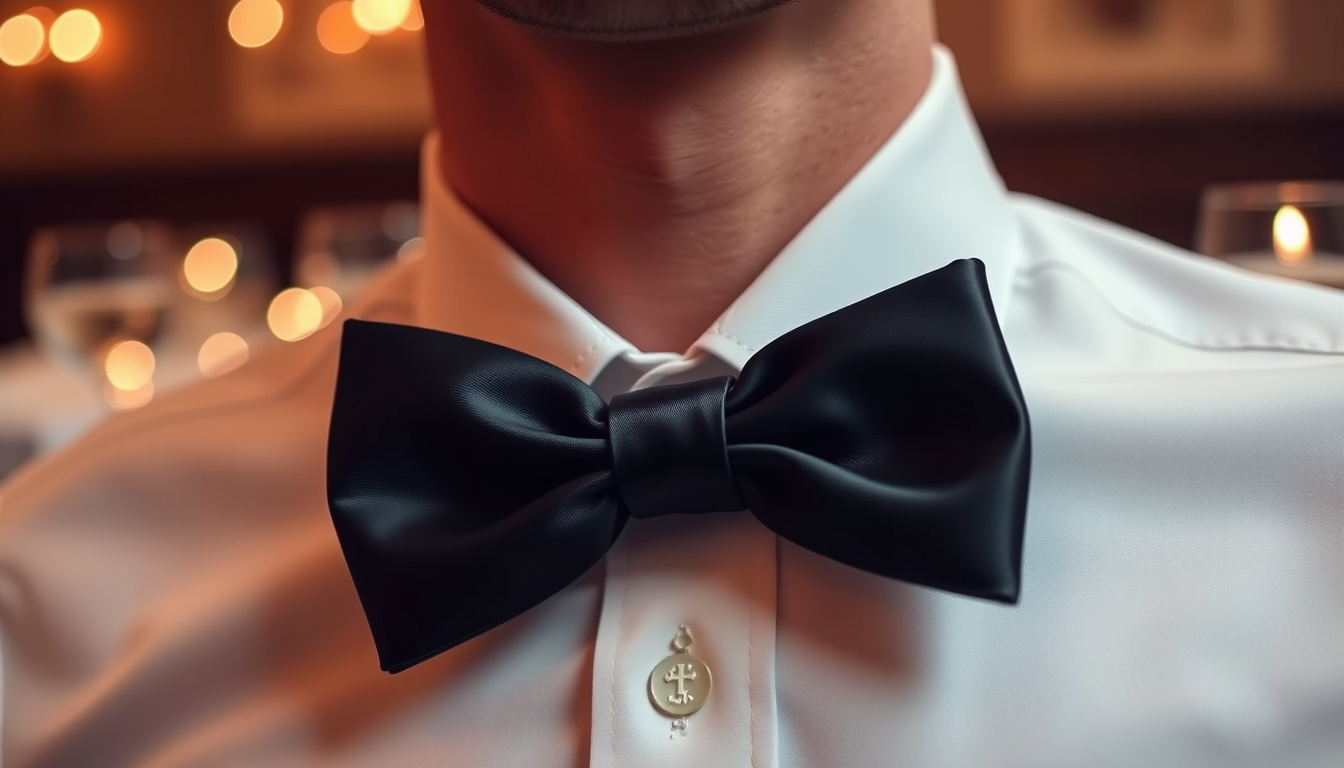
Few dress codes carry the same weight as black tie. It signals an evening of elegance and tradition, but what it actually requires can be surprisingly flexible — black tie refers to the formality of the event, not necessarily the colour black, as The Knot (leading wedding planning platform) explains.
Typical hemline: Floor-length or midi ·
Preferred fabrics: Silk, velvet, satin, lace ·
Colour conventions: Dark shades (black, navy, deep jewel tones); black is classic but not mandatory
Quick snapshot
- Floor-length or formal midi gown (The Knot) (weddingsonline.ie)
- Luxury fabrics: silk, velvet, satin (The Knot) (weddingsonline.ie)
- Dark colours: black, navy, deep wine (weddingsonline.ie)
- Evening gown or elegant cocktail dress (The Knot) (Bella Bridesmaids)
- Statement accessories and heels (The Knot) (Bella Bridesmaids)
- Avoid casual fabrics and mini lengths (Bella Bridesmaids)
- Tuxedo with bow tie (weddingsonline.ie)
- Patent leather shoes (The Knot)
- Optional: cummerbund or vest (The Knot)
- Formal gown with wrap/layer (weddingsonline.ie)
- Rich jewel tones welcome (weddingsonline.ie)
- Men: dark suit or tuxedo (weddingsonline.ie)
Key facts at a glance
Six defining elements of a black tie dress—each grounded in formal etiquette and current guidance from wedding and style authorities.
| Attribute | Standard expectation |
|---|---|
| Definition | The most formal of common dress codes, requiring elegant evening attire. |
| Key element for women | Floor-length gown or high-end cocktail dress (The Knot). |
| Key element for men | Tuxedo with black bow tie (weddingsonline.ie). |
| Typical length | Floor or tea (midi) length for dresses (The Knot). |
| Accepted fabrics | Silk, velvet, satin, lace, crepe (The Knot). |
| Primary colour rule | Dark tones; black is classic but not mandatory (weddingsonline.ie). |
The pattern: black tie is formalwear with strict boundaries on length, fabric, and colour—but within those boundaries, there is room for personal style.
What is considered a black tie dress?
A black tie dress is defined by three elements: length, fabric, and colour. Floor-length or tea-length gowns in luxurious materials such as silk, velvet, satin, or lace are standard, and dark solid colours or rich jewel tones are preferred. As The Knot (leading wedding planning platform) puts it, “black tie refers to the formality of the event, not necessarily the colour black.”
Key characteristics: length, fabric, colour
- Length: Floor-length is the gold standard. Tea-length (midi) is acceptable if the fabric is formal. Short hemlines above the knee are considered unsuitable (Bella Bridesmaids (bridesmaid fashion retailer)).
- Fabric: Jacquard, brocade, velvet, lace, silk, and taffeta are recommended (The Knot).
- Colour: Dark shades—black, navy, grey, emerald, burgundy—are the norm (weddingsonline.ie (Irish wedding directory)).
Differences from cocktail attire
Cocktail attire allows shorter hemlines (knee-length or above) and less formal fabrics. Black tie expects a higher level of sophistication: think floor-length, structured silhouettes, and refined accessories. According to OneFabDay (Irish wedding publication), black tie is the most formal wedding dress code after white tie, which demands a full-length gown in luxurious fabric for women.
When a dress is not appropriate for black tie
- Mini skirts, midi dresses in casual fabrics like cotton or jersey, and anything with denim are out (CHARLES & KEITH (fashion accessories brand)).
- Overly dramatic sequins, loud prints, or white/ivory (reserved for the bride) are also inappropriate (CHARLES & KEITH).
The trade-off: choosing a dress that breaks any of these conventions risks looking underdressed at a black tie event—especially if the invitation specifies the code.
Floor-length gowns remain the safest bet, but a well-tailored midi in velvet or silk can work if it meets the formality threshold. When in doubt, go long.
What is the dress code for black tie?
The black tie dress code sets a high bar for both women and men. For women, the standard is a floor-length evening gown or an elegant cocktail dress. For men, a tuxedo with a bow tie and patent leather shoes is mandatory. As The Knot notes, “the code enforces a high level of formality; accessories should be refined.”
Formal expectations for women
- Floor-length gowns or elegant cocktail dresses that cover the knee (The Knot).
- High heels, statement jewellery, and a clutch complete the look (The Knot).
Formal expectations for men
- Tuxedo with black bow tie (weddingsonline.ie).
- Patent leather shoes, optional cummerbund or vest (The Knot).
Variations by region and event
In Ireland, a black tie wedding may be hosted in a castle, hotel, or church, and local customs encourage formal gowns in rich jewels tones with practical layers due to the cool climate (weddingsonline.ie). Some regions allow a dark suit instead of a tuxedo if the invitation says “black tie optional,” but for a full black tie code, the tuxedo is expected.
What this means: the code is more rigid for men than for women, who have a slightly wider wardrobe to choose from—provided each item meets the formality threshold.
A “black tie optional” invitation gives more leeway, but never assume a cocktail dress or a dark suit will pass if the host explicitly says “black tie.” Always ask the host or check the wedding website if in doubt.
What does a female wear to a black tie event?
The most common choice is a floor-length gown, but modern alternatives are gaining ground. The Knot notes that “for women, black-tie expectations are floor-length evening gowns in dark or jewel tones, with formal jumpsuits or women’s tuxedos as alternatives.”
Gowns vs. cocktail dresses
- Floor-length gowns remain the safest and most traditional option (The Knot).
- Elegant midi dresses in fine fabric are acceptable if they meet the formality bar (The Knot).
Jumpsuits and separates as modern alternatives
Jumpsuits made from luxury fabrics like satin or velvet are increasingly accepted, especially when styled with statement accessories. Their acceptance is not universal, but many style guides now list them as a valid option for black tie events (The Knot).
Footwear and accessory guidelines
- Heels or dressy flats are appropriate (The Knot).
- Statement jewellery, a clutch bag, and a wrap or shawl complete the outfit (The Knot).
The implication: women have more choices than ever, but each piece must be judged against the same formality standards—fabric, cut, and overall elegance.
What do you wear to a black tie wedding in Ireland?
Ireland’s black tie weddings come with their own set of nuances. Guests often opt for formal gowns in rich colours or classic black, but layers and wraps are practical due to Ireland’s cool climate, as advised by weddingsonline.ie (Irish wedding directory).
Local customs and weather considerations
- Formal gown with a wrap or shawl is common (weddingsonline.ie).
- Rich jewel tones—emerald, burgundy, navy—are widely accepted (weddingsonline.ie).
Venue type (castle, hotel, church) influence
If the wedding is in a castle or historic hotel, the formality is often higher, and guests tend to dress up more. A church ceremony may call for a dress that can be covered with a wrap for modesty.
Irish bridal party dress code nuances
While the bridal party usually sets the tone, guests should avoid outshining them. Courtship traditions may influence dress formality—some Irish weddings maintain a strong tradition of formal eveningwear. According to OneFabDay, black tie is the most formal common wedding dress code after white tie in its dress-code breakdown, reinforcing the need for elegance.
The pattern: Irish wedding guests should prioritise warmth without sacrificing style—think velvet, silk, and rich colours that nod to tradition.
What not to wear to a black tie?
The black tie dress code has clear boundaries. Short or mini dresses are considered unsuitable for black-tie weddings, according to Bella Bridesmaids (bridesmaid fashion retailer). Additionally, CHARLES & KEITH advises avoiding white and anything remotely bridal, as well as overly dramatic or revealing ensembles.
Casual fabrics and cuts
- Denim, cotton, jersey, linen—all too casual (Bella Bridesmaids).
- A-line mini dresses, skater silhouettes, and anything that reads as daytime.
Inappropriate colours and patterns
- White, ivory, or cream (reserved for the bride) (CHARLES & KEITH).
- Loud prints, neons, or anything that draws more attention than the bride (Bella Bridesmaids).
Avoiding overly revealing or themed outfits
- Too much cleavage, ultra-high slits, or see-through fabrics are considered inappropriate (CHARLES & KEITH).
- Costume-like attire or anything that could upstage the wedding party.
The trade-off: breaking these rules doesn’t just risk a fashion misstep—it can make you feel uncomfortable and distract from the couple’s celebration.
Irish wedding guests: avoid underdressing at all costs. A formal gown in a dark shade, paired with practical but elegant accessories, ensures you respect both the code and the local etiquette.
What’s confirmed and what’s unclear
Confirmed facts
- Floor-length gowns are standard black tie attire for women (The Knot).
- Men must wear a tuxedo with a bow tie (weddingsonline.ie).
- Casual fabrics and mini skirts are not acceptable (Bella Bridesmaids).
What’s unclear
- Whether jumpsuits and separates are universally accepted at all black tie events (The Knot notes they are “increasingly accepted” but not standard).
- Exact rules for white-tie vs black-tie differentiation in some regions (the difference is clear in theory—white tie requires a floor-length gown and white gloves—but in practice some events blur the lines).
The implication: the rules are clear for traditional attire, but modern interpretations and regional variations leave some grey areas.
Perspectives from etiquette experts
“For women, a black tie event calls for a formal gown or dressy cocktail dress. The key is elegance—avoid anything casual.”
“The hallmark of black tie is refinement in every detail. From the fabric to the accessories, each choice should signal respect for the occasion.”
“Ireland’s wedding guests are commonly advised to dress formally and avoid underdressing when a black-tie code is specified.”
weddingsonline.ie (Irish wedding directory)
The pattern: etiquette authorities agree that refinement is key, but specific guidelines vary between sources.
Summary: dressing for black tie with confidence
Black tie dress code is about respect for the event and the hosts. Women have a range of options—from traditional floor-length gowns to modern jumpsuits—but each must meet the formality bar of luxurious fabric, elegant cut, and refined accessories. In Ireland, where the climate demands layers and local etiquette leans toward rich colours, the smart approach is to invest in a well-made gown that can be dressed up with a wrap and statement pieces. For Irish wedding guests, the choice is clear: choose a formal gown in a jewel tone, bring a wrap for the evening chill, and you’ll be perfectly in line with local expectations.
For those attending a formal wedding, the black tie wedding guest guide offers tailored advice on floor-length gowns and accessories suitable for the occasion.
Frequently asked questions
Are black tie dresses always black?
No. While black is classic and traditional, dark shades like navy, emerald, burgundy, and charcoal are perfectly acceptable. The key is that the colour is subdued and elegant, not bright or flashy (weddingsonline.ie).
Can I wear a pantsuit to a black tie event?
Yes, but only if the pantsuit is made of a formal fabric such as satin or velvet and is cut in a sophisticated, tailored silhouette. According to The Knot, women’s tuxedos and formal jumpsuits are gaining acceptance as alternatives.
What accessories are essential for a black tie dress?
A clutch bag, statement jewellery (such as chandelier earrings or a cocktail ring), and heels or dressy flats. A wrap or shawl is also practical for cooler venues. Avoid casual accessories like cross-body bags or chunky sneakers (The Knot).
How do I choose a black tie dress for my body type?
Focus on silhouettes that flatter your shape: A-line gowns suit many body types, while sheath dresses work well for taller frames. The most important factor is that the dress is formal in fabric and cut. For plus-size guests, empire-waist or wrap-style gowns are forgiving and elegant.
Is there a difference between black tie and white tie for women?
Yes. White tie is the most formal dress code and requires a full-length gown, often with white gloves, and more conservative jewellery. Black tie is slightly less formal but still demands a floor-length garment or an equally elegant alternative (OneFabDay).
Can I wear a black tie dress to a daytime formal event?
Not usually. Black tie is an evening dress code. For daytime formal events, consider a polished mid-length dress or a smart suit instead of an evening gown. Wearing a floor-length gown to a daytime event may look overdressed (CHARLES & KEITH).

Jack Hayes is Senior Reporter at Oz Monitorly, covering breaking stories and explainers.